How to Get Rid of Mold on Clothes (and When to Toss Them)
Musty spots on clothes usually wash out if you act quickly and follow the care label. Here's what to use on each fabric and how to store clothes so it doesn't happen again.
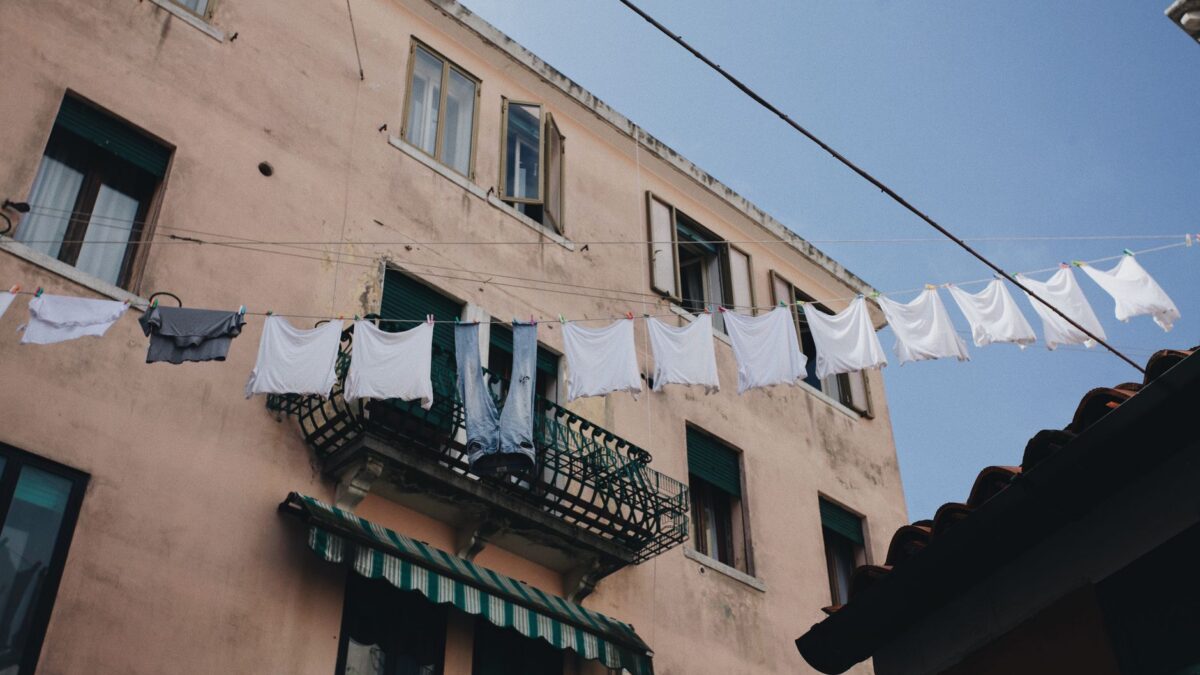
To get mold out of washable clothes, take them outside and brush off loose growth. Then wash them on the warmest water the care label allows, with regular detergent plus an oxygen bleach if the fabric permits it. Dry them fully, in the sun if you can. Use chlorine bleach only on items whose label shows it’s bleach-safe, and never on wool, silk or spandex. If an item still smells musty or stays stained after two or three washes, or the fabric is rotting, it’s time to let it go.
Why clothes get moldy
Mold grows on fabric that stays damp. Common causes:
- Wet clothes left in the washer for hours
- Gym bags, swimsuits and towels zipped up wet
- Clothes stored in damp basements, garages or closets on cold outside walls
- Plastic bins packed with items that weren’t fully dry
- Water leaks or flooding
Mold looks like spots or fuzzy patches in black, green, gray or white, and usually comes with a musty smell. Sometimes the smell is the only sign.
What you need
- Gloves and a mask (an N95 if there’s a lot of growth)
- A soft brush you can wash or throw away
- Your usual laundry detergent
- Oxygen bleach (sodium percarbonate) for colorfast washables
- Chlorine bleach only for bleach-safe whites
- A sunny spot or clothesline
Step by step
- Check the care label first. It tells you the maximum water temperature, whether bleach is allowed, and whether the item should only be dry cleaned. Our guide to laundry care symbols decodes them.
- Brush off loose mold outdoors. Doing this inside spreads spores around the room. Wear gloves and a mask.
- Pre-soak if the label allows. Dissolve oxygen bleach in warm water according to the package and soak colorfast items for the time it recommends. Test on an inside seam first.
- Wash on the warmest setting the label allows with a normal dose of detergent. Don’t overload the machine. Clothes need room to move.
- Check before drying. If you can still see marks or smell mustiness, wash again. Heat from the dryer can set stains.
- Dry fully. Sunlight helps dry fabric quickly and can fade some stains, though it can also fade colors. A dryer is fine if the label allows it.
- Clean your washer if you’ve been washing moldy loads. See how to clean a washing machine.
Which products for which fabric
| Fabric | Safe to try | Avoid |
|---|---|---|
| White cotton and linen | Hot wash if the label allows; oxygen bleach; chlorine bleach if label permits | Mixing bleach with any other additive |
| Colored cotton and synthetics | Warm wash; oxygen bleach after a spot test | Chlorine bleach, which strips color |
| Wool and silk | Gentle cool hand wash, wool detergent, or a professional cleaner | Chlorine bleach and hot water |
| Spandex and stretch fabrics | Wash per label; oxygen bleach only if allowed | Chlorine bleach, high dryer heat |
| Leather and suede | A leather specialist | Soaking or machine washing |
| “Dry clean only” | Tell the cleaner it’s mold | Home washing |
A note on borax and vinegar
Borax is sold as a laundry booster and can help with odors, but it isn’t harmless. Its label warns about eye irritation and keeping it away from children and pets. Measure it per the box and store it in its original container. White vinegar is sometimes used in the rinse to cut odors. It’s fine on its own in the rinse dispenser, but never in the same load or cycle as chlorine bleach, because the two make toxic chlorine gas. Never mix bleach with ammonia or other cleaners either.
Use one additive per wash. Ventilate the laundry area and keep all products in their original containers, out of reach of kids and pets.
If someone swallows, inhales or gets a cleaning product in the eyes, call Poison Control at 1-800-222-1222 (US) or emergency services.
When to throw it out
- The smell or stain persists after two or three careful washes.
- The fabric is thin, falling apart, or has holes where mold grew.
- The item soaked in floodwater or sewage and can’t be washed hot. Many flood-soaked soft items have to go.
- It’s a stuffed or padded item, like a cushion or a padded jacket, and the mold is inside the filling.
- Washing it is not worth the cost of a professional cleaner.
How to stop it happening again
- Move laundry to the dryer or line as soon as the cycle ends.
- Hang up wet towels and gym clothes right away. See how to get the smell out of towels.
- Store only fully dry, clean clothes. Body oils and food spots feed mold.
- Use breathable cotton storage bags or bins with some airflow in damp areas, and keep them off concrete floors.
- Leave a little space between clothes in closets, especially on exterior walls.
- Keep indoor humidity below 60%, ideally 30% to 50%, as the EPA recommends.
- If a whole closet smells, deal with the room, not just the clothes. See how to get rid of mold smell.
Bottom line
Brush mold off outside, wash on the warmest temperature the label allows, add oxygen bleach to colorfast items, and dry completely. Use chlorine bleach only on bleach-safe whites and never mix it with vinegar, ammonia or anything else. Delicate and dry-clean-only items go to a professional. If an item won’t come clean after a few tries, replace it.
FAQ
Does washing clothes kill mold?
Washing with detergent physically removes most mold, and thorough drying stops regrowth. Warm water and oxygen bleach help with stains and smells.
Can I wear clothes that had mold after washing?
If they look and smell clean after washing and drying, most people wear them. If you have mold allergies or asthma and react to an item, set it aside and ask your doctor.
Will sunlight alone remove mold?
Sun helps dry fabric and may fade stains, but it won’t remove growth on its own. Wash first.
Should I wash moldy clothes with other laundry?
Wash them separately the first time, then wipe the washer gasket and run a cleaning cycle.