How to Organize a Pantry: Zones, Airtight Containers and No More Moths
Zones, first-in-first-out rotation and tight-lidded containers keep a pantry usable and pest-free. You do not need to buy a matching canister set to do it.
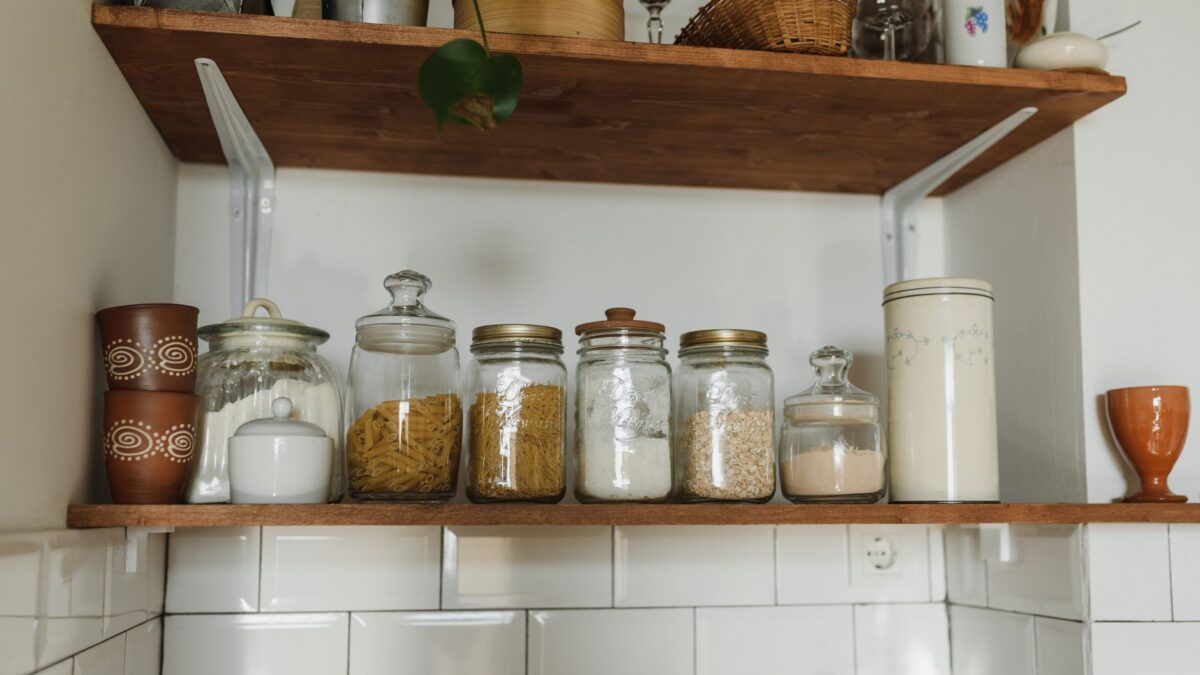
To organize a pantry, empty it, toss expired or damaged food, wipe the shelves, then group what is left into zones (baking, breakfast, grains and pasta, cans, snacks) with older items in front so they get used first. Airtight containers with labels showing what is inside and when you opened it keep food fresher and help keep out pantry moths and beetles. You do not need a matching set of clear canisters; sealed jars you already have work just as well.
A clear, rotated pantry saves money because you stop buying a third jar of cumin and stop finding stale crackers at the back.
What you need
- A trash bag and a box for unopened food to donate
- A vacuum with a crevice tool
- Warm water with a little dish soap, and a dry cloth
- Airtight containers or jars (reuse what you have first)
- Masking tape or labels and a marker
- Optional: shelf liner, risers, a lazy Susan, small bins
Step by step
- Take everything out and set it on the counter or table by type.
- Check dates and condition. Throw out anything stale, rancid-smelling, bulging, leaking or showing insects. Unopened, in-date food you will not use can go to a food bank, if they accept it.
- Inspect for pests. Look for webbing in flour or cereal, small moths flying out, tiny holes in packaging, or larvae in corners. If you find any, see the pantry moth section below before going further.
- Vacuum the shelves, especially corners and cracks where crumbs collect.
- Wipe shelves with a lightly damp cloth and dish soap, then dry completely. Avoid soaking shelves; moisture plus flour dust can turn into a paste in cracks.
- Plan your zones (see below), placing the most-used groups at eye level.
- Decant into airtight containers where it helps, and label them.
- Put food back with the soonest-to-expire items at the front.
Pantry zones that work
| Zone | Where to put it | Tips |
|---|---|---|
| Everyday breakfast and snacks | Eye level or a low shelf for kids | Open bins make grabbing easy |
| Grains, pasta, rice, beans | Middle shelves | Airtight containers; label with type and cook time |
| Baking (flour, sugar, chocolate, baking soda) | One shelf or one bin | Whole-grain flours keep better in the fridge or freezer |
| Canned goods and jars | Lower shelves (heavy) | Risers or a can rack so labels show |
| Oils, vinegars, sauces | Away from the stove and oven | A tray catches drips |
| Spices | Drawer insert, door rack or tiered shelf | Alphabetical or by cuisine |
| Bulk backups | Top shelf | Only what you will use before it goes stale |
First in, first out
Restaurants rotate stock so the oldest product gets used first, and the same idea works at home. When you unpack groceries, move older items forward and put new ones behind them. For cans and jars, a tiered riser or a narrow can dispenser makes this almost automatic. If something keeps getting pushed to the back, it is a sign you are buying too much of it.
Containers and labels
Clear containers let you see what is running low, but they are not mandatory. What matters is a tight-fitting lid. Clemson University’s Home and Garden Information Center recommends insect-proof containers with tight lids for dry foods, because pantry pest larvae can get through thin packaging.
- Glass jars with gasketed lids, screw-top jars and good-quality plastic canisters all work.
- Label each container with what it is and the date you opened or filled it. Keep the cooking instructions by cutting them off the original box and taping them inside the lid or to the back.
- Do not top up an old batch with new food; use up the old first, then wash and dry the container before refilling.
- Square containers fit shelves better than round ones and waste less space.
Preventing pantry moths and beetles
The small moths that flutter out of a cereal box are usually Indian meal moths, and the damage comes from their larvae feeding inside flour, grains, nuts, dried fruit, pet food and birdseed. Prevention is mostly about storage and turnover:
- Buy amounts you will use within a few months, and check packages for damage before buying.
- Store dry foods in airtight containers, not just their original bags or boxes.
- Freeze new flour, grains and nuts if you have had problems before. Clemson’s fact sheet on Indian meal moths suggests freezing grain products for three days after purchase at 0°F or below.
- Clean up spills promptly and vacuum shelf corners regularly.
- Store pet food and birdseed sealed, and ideally outside the food pantry.
If you already have moths, throw out infested food in a sealed bag outside, vacuum the shelves thoroughly (including cracks and the underside of shelf edges), wipe them, and only return food that is sealed and clean. Pheromone traps help you monitor adult moths but do not solve an infestation on their own. Insecticides are a last resort and should not be used around food; if you use one, the label is the law. Similar cleanup steps help with ants; our guide to getting rid of ants in the kitchen covers baits and entry points.
Shelf liners: worth it?
Shelf liners protect wood or painted shelves from sticky rings and make cleanup easier. Choose a wipeable, non-adhesive liner you can lift out and wash; adhesive types can trap crumbs at the edges and can peel paint when removed. Cut liners slightly short of the back wall so you can vacuum the gap. Replace them if they become stained or sticky, as they can hide crumbs that attract pests.
Small pantry and cabinet ideas
- Use the back of the door for an over-door rack with spices and small packets.
- Put a lazy Susan in deep corners for oils and sauces.
- Use shelf risers to double space for cans and jars.
- Keep a running grocery list on the inside of the door so you write down items as they run out.
Once the pantry is done, the fridge is the natural next step; see how to organize a fridge for shelf-by-shelf placement.
Bottom line
Empty, purge, vacuum and dry the shelves, then zone your food with everyday items at eye level and heavy cans low. Rotate older items to the front, keep dry foods in airtight labeled containers with an opened date, and buy only what you will use within a few months. Those habits do more to prevent pantry moths than any trap or spray.
FAQ
Do I need clear matching containers?
No. Any container with a tight-fitting lid protects food. Clear ones help you see levels at a glance, but reused jars with labels do the same job for free.
How often should I clean out the pantry?
A quick check every month or two, and a full empty-and-wipe about twice a year, is reasonable for most households. Clean spills when they happen.
Are bay leaves effective against pantry moths?
The evidence is not strong. Airtight storage, buying smaller amounts and keeping shelves clean are far more reliable.
Where should I keep flour?
White flour keeps well in an airtight container in a cool, dry pantry. Whole-wheat and other whole-grain flours contain more oil and keep longer in the fridge or freezer, in a sealed container.