How to Clean Car Windows Without Streaks (Inside Film, Tint and Wipers)
That foggy haze on the inside of the windshield comes back no matter how often you wipe it. Here is what causes it and the two-towel method that leaves glass clear.
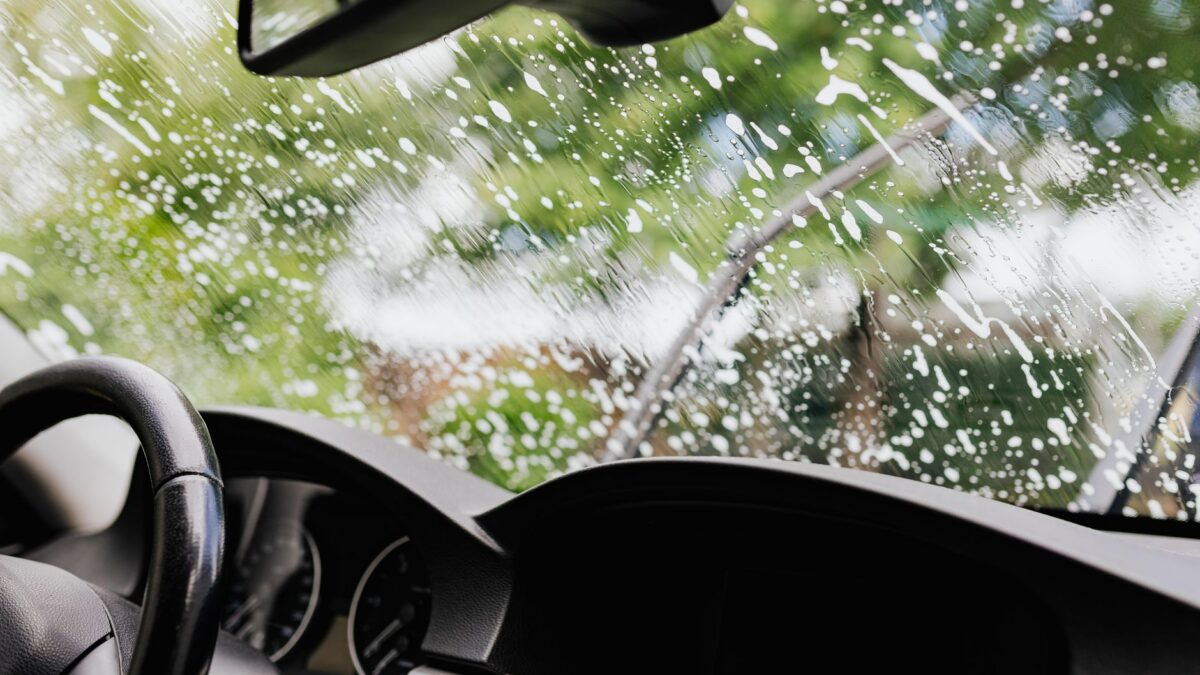
For streak-free car windows, clean in the shade on cool glass with an ammonia-free glass cleaner and two clean microfiber towels: one to wipe the grime, the second, dry one to buff. Spray the towel, not the glass, on the inside so cleaner doesn’t drip onto the dash or screens. Use ammonia-free products anywhere there’s aftermarket tint film, and finish by cleaning the wiper blades and topping up washer fluid suited to the season.
What you need
- Ammonia-free automotive glass cleaner (or distilled water for light dust)
- Two or three clean, lint-free microfiber towels, ideally a waffle-weave or glass type, washed without fabric softener
- A long-handled windshield tool or a towel wrapped around your hand for the base of the windshield
- Washer fluid rated for your climate
Why the inside gets hazy
The film on the inside of a windshield builds up from several sources: vapors released by interior plastics and vinyl, especially when the car heats up in the sun; smoke residue; skin oils from hands and breath; and dust from the vents. It scatters light, which is why it’s most obvious when driving into low sun or at night facing headlights. Regular cleaning and clean cabin air (a fresh cabin air filter) help it build up more slowly. If you smoke in the car or have just cleaned the interior, the glass will likely need extra passes.
Step-by-step: the two-towel method
- Park in the shade. Cleaner evaporates too quickly on hot glass and leaves streaks.
- Do the outside first if you’re washing the car. Exterior glass gets washed with the body; afterward, a pass of glass cleaner removes any remaining film. See how to wash a car at home.
- Inside: spray the towel lightly, not the glass, to keep overspray off the dashboard, screens and upholstery.
- Wipe in one direction, side to side on the inside and top to bottom on the outside. If streaks appear later, you’ll know which side they’re on.
- Buff immediately with the second, dry towel before the cleaner dries.
- Get the edges. Roll each side window down a few inches to clean the top edge that hides inside the door seal. Use a long-handled tool or towel for the base of the windshield, where film builds up most.
- Swap towels when they get damp or dirty. A saturated towel smears.
Tinted windows
Factory tint is usually inside the glass itself and isn’t damaged by ordinary cleaners. Aftermarket tint film, applied to the inside of the windows, is more delicate. Film installers commonly advise against ammonia-based cleaners, which can degrade the film over time, and against abrasive pads, scrapers and blades on the film. Use an ammonia-free cleaner or a mild soap solution with a soft microfiber towel, and be careful not to catch the film’s edge. After a new tint installation, wait the curing time your installer gives before cleaning or rolling windows down.
What works and what causes streaks
| Use | Avoid |
|---|---|
| Ammonia-free automotive glass cleaner | Ammonia cleaners on aftermarket tint film |
| Clean microfiber towels, washed without softener | Paper towels (lint) and old cotton rags |
| Cool glass in shade | Hot glass in direct sun |
| Light mist of cleaner | Soaking the glass, which runs onto the dash |
| Separate towel for glass only | Towels used with waxes, dressings or interior protectants |
That last row catches many people: a towel that’s touched tire shine or a dash protectant will spread oily residue across the glass. Keep a set of towels just for windows. For general home glass, the same habits apply; diluted white vinegar works on household windows, as covered in baking soda and vinegar cleaning, but on cars, stick to products labeled safe for automotive glass and trim.
Wipers and washer fluid
- Clean the wiper blades. Lift each arm and wipe the rubber edge with a damp microfiber cloth until it stops leaving dark marks. Dirty blades smear grime across clean glass.
- Replace blades that streak, chatter, skip or have cracked or torn rubber. Your owner’s manual or the blade maker gives a recommended interval.
- Use proper washer fluid, not plain water or household glass cleaner, which can freeze, leave residue or harm paint and seals. In winter, use fluid rated for freezing temperatures where you live. Keep washer fluid away from children and pets; many types contain methanol and are toxic if swallowed.
- Clear bugs and tree sap promptly from the outside of the windshield before they harden. See how to remove tree sap from a car.
Safety notes
Work with doors open for ventilation, keep products in their original containers, never mix cleaners, and don’t leave glass cleaner or washer fluid in a hot car or where children can reach it. Don’t clean the windshield while driving.
If someone swallows, inhales or gets a cleaning product in the eyes, call Poison Control at 1-800-222-1222 (US) or emergency services.
Bottom line
Shade, an ammonia-free cleaner and two dry microfiber towels solve most streaks. Clean the inside more often than you think, keep window towels separate from everything else, and give your wiper blades a wipe every time you do the glass.
FAQ
Why do my car windows still streak after cleaning?
Usually a dirty or damp towel, cleaner drying on warm glass, residue from a dressing-contaminated towel, or not buffing dry. Switch to fresh towels and work in the shade.
Can I use household glass cleaner on car windows?
Many household glass cleaners contain ammonia, which isn’t recommended for aftermarket tint film and can affect some interior trim. Use an ammonia-free product made for cars.
How do I stop the inside of the windshield fogging up?
A clean inside surface fogs less. Use the defroster with fresh air rather than recirculate, run the AC with the heat to dry the air, and check that the cabin air filter is in good shape.
How often should I clean the inside of the windshield?
When you see haze in low sun or at night, clean it. For many drivers that’s every few weeks, more often in hot weather or if anyone smokes in the car.