How to Clean a Car Interior: The Top-to-Bottom Order That Saves Time
Clean in the right order and you only do each job once. Here is a practical routine for dash, vents, cupholders, seats, carpets and glass, plus the products to keep off screens and leather.
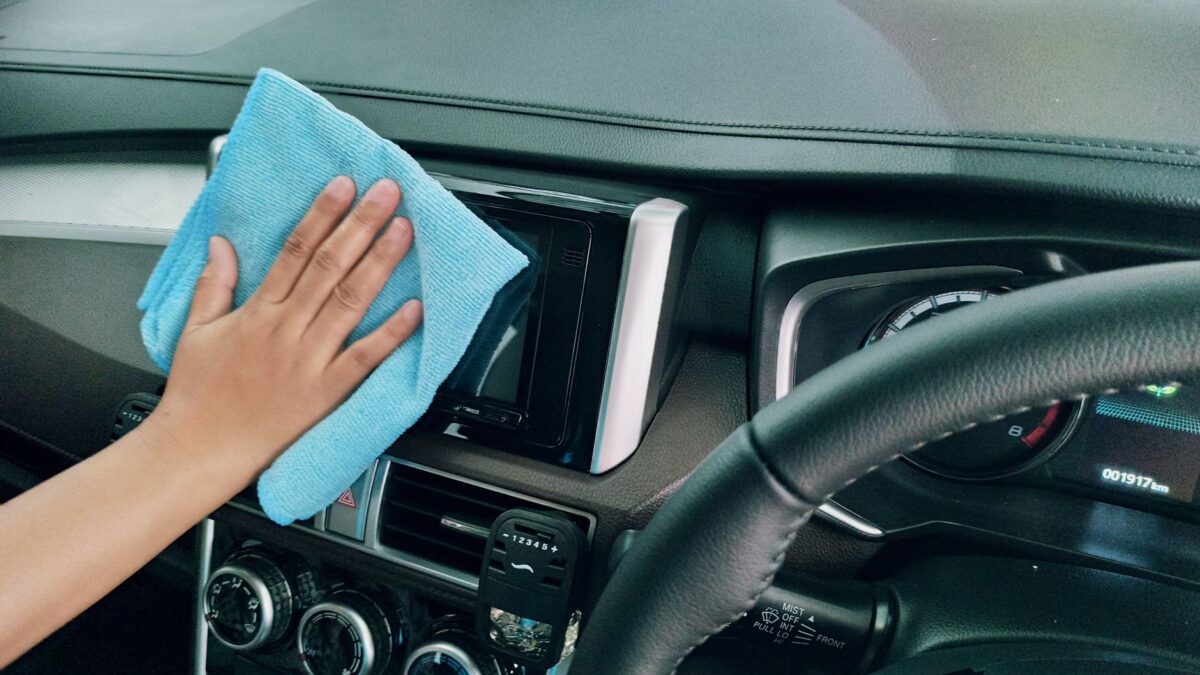
Clean a car interior from the top down: remove trash and mats, dust the headliner, vents and dashboard, wipe hard plastics with a damp microfiber cloth and a mild interior cleaner, vacuum seats and carpet, then do the windows last so dust from the other jobs doesn’t settle on clean glass. Keep ammonia, bleach and harsh solvents away from touchscreens, leather and soft-touch plastics, and check your owner’s manual for any surface-specific rules.
What you need
- Trash bag and a box for items that belong in the house
- Vacuum with crevice tool and soft brush attachment (a cordless or wet-dry vac both work)
- Several microfiber cloths, plus soft detailing brushes or a clean paintbrush
- Interior cleaner labeled for automotive plastics and vinyl, or a few drops of mild dish soap in a bucket of warm water
- Screen-safe cleaner or just distilled water for displays
- Leather cleaner if you have leather seats
- Ammonia-free glass cleaner
The order of work
- Declutter. Empty door pockets, seat-back pockets, the glovebox, the center console and the trunk. Toss trash, bring belongings inside.
- Remove floor mats and set them aside to clean separately (see how to clean car floor mats).
- Dust from the top. Lightly brush the headliner only if it’s dusty; don’t soak it. Then use a soft brush on vents, seams and buttons while the vacuum’s brush tool picks up what you loosen.
- Wipe the dashboard and hard plastics. Spray cleaner onto the cloth, not onto the dash, so it doesn’t drip into switches or the instrument cluster. Wipe and follow with a dry cloth.
- Clean screens. Use a dry or barely damp microfiber cloth, light pressure and a product the vehicle maker allows. More detail in how to clean a car dashboard and touchscreen.
- Cupholders, door pockets and console. Lift out removable cupholder liners and wash them in warm soapy water. Use a cloth wrapped around a finger or a soft brush for sticky residue.
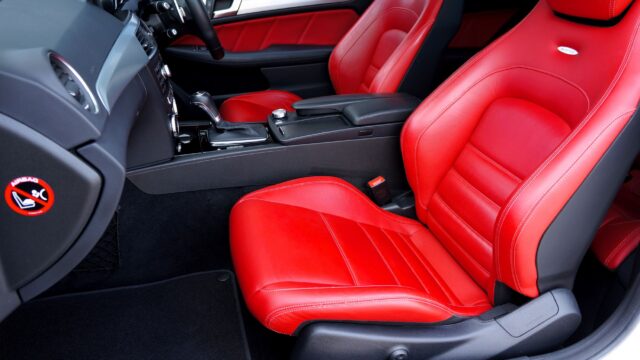
- Vacuum seats. Push the seats all the way forward, then all the way back, to reach the rails and the floor underneath. Use the crevice tool in seams.
- Vacuum carpet. Work from the back toward the front. Brush the carpet first to loosen embedded grit and pet hair.
- Treat stains on fabric seats or carpet now, with as little liquid as possible (see below).
- Clean the glass last, inside and out. Our guide to cleaning car windows without streaks covers the inside film problem.
- Replace the dry mats and make sure the driver’s mat is secured by its retention hooks or clips so it can’t slide under the pedals.
What to use on each surface
| Surface | Use | Avoid |
|---|---|---|
| Hard plastic and vinyl trim | Damp microfiber, mild soap solution or automotive interior cleaner | Bleach, solvents, abrasive pads, greasy dressings that cause glare |
| Touchscreens and instrument displays | Dry or slightly damp microfiber; screen cleaner only if the maker allows | Ammonia, alcohol (unless the manual allows it), paper towels, spraying directly |
| Leather | Leather cleaner, then conditioner if the maker recommends one | All-purpose sprays, vinegar, bleach, soaking |
| Fabric seats and carpet | Vacuum, then upholstery or carpet cleaner, extracted or blotted | Overwetting, which can lead to mildew |
| Headliner | Dry brush, then foam cleaner on a cloth for spots | Spraying or scrubbing, which can loosen the adhesive |
| Glass | Ammonia-free glass cleaner, two microfiber cloths | Ammonia on tinted windows |
Find the odor sources while you’re in there
A cleaning session is the best time to track down smells: food wrappers under the seats, spilled milk or coffee in the carpet, a wet umbrella in a door pocket, damp mats, or gym clothes in the trunk. If a musty smell remains after cleaning, check whether the carpet is damp (possible leak) and when the cabin air filter was last replaced. Our guide on how to get a smell out of a car walks through each cause.
Safety notes
- Clean with the engine off, in a ventilated spot, and with doors open when you use sprays.
- Test any cleaner on a hidden spot first, such as under a seat or the lower edge of a door panel.
- Don’t use dressings or slippery protectants on steering wheels, pedals or the driver’s floor mat.
- Keep products in their original containers and don’t leave them in a hot car or where children can reach them. Never mix cleaners.
- Don’t spray liquid into airbag covers, seat-mounted airbag areas or electrical switches; wipe with a damp cloth instead.
If someone swallows, inhales or gets a cleaning product in the eyes, call Poison Control at 1-800-222-1222 (US) or emergency services.
How often
A quick tidy and vacuum every week or two keeps grit from grinding into carpet and seats. A deeper clean with seats, plastics and glass every few months, and seasonally if you drive on salted winter roads, is enough for most cars.
Bottom line
Empty the car, work from the roof down, wipe plastics with a damp cloth rather than a soaked one, vacuum before you treat stains, and leave the glass until the end. Gentle products and microfiber cover nearly everything; the owner’s manual settles any doubt about screens and leather.
FAQ
Can I use household wipes on my car interior?
Some household wipes contain alcohol or other ingredients that can dry or discolor leather, coatings and screens. Check the vehicle maker’s guidance; a damp microfiber cloth with mild soap is the safer default.
How do I get sand out of car carpet?
Brush the carpet hard with a stiff brush to bring sand to the surface, then vacuum slowly in several directions. Repeat a few times; sand settles deep in the pile.
Should I use a steam cleaner inside the car?
Steam can help on carpet and some fabrics, but heat and moisture can damage leather, screens, electronics and headliner adhesive. Keep it away from those areas and follow the steamer’s and car maker’s instructions.
How long should the interior dry?
After any wet cleaning, leave doors or windows open in dry weather, or run the heater with fresh air, until carpets and seats feel fully dry. Trapped damp is the usual cause of musty smells.