Musty Smell in Car After Rain: Find the Leak and Dry It Out
A musty smell in the car after rain usually means water is getting in. How to find the leak, dry carpet and padding, and keep mildew from coming back.
A musty or mildew smell that shows up after rain almost always means water is getting into the cabin and sitting somewhere it cannot dry, usually under the carpet, in the trunk or inside the air conditioning system. Air fresheners will not fix it. The two jobs are to find where the water enters and stop it, then dry the interior completely, including the padding under the carpet, before mildew settles in.
Why the car smells musty after rain
Mildew needs moisture, warmth and something to feed on, and a car interior offers all three: carpet, foam padding, fabric seats and the dust that collects in them. When water gets in and stays for more than a day or two, the smell starts. The most common causes are:
- Clogged drains. Sunroofs, the cowl area below the windshield and door bottoms all have drain holes. Leaves and grit block them, and water backs up into the cabin.
- Worn or damaged seals. Door, window, trunk and hatch weatherstripping shrinks, cracks or tears with age.
- A blocked AC condensate drain. The air conditioner pulls moisture out of the air and drains it under the car. If the drain tube clogs, water can soak the front passenger footwell.
- Damp evaporator or cabin air filter. Even without a leak, moisture left on the AC evaporator can grow mildew and blow a musty smell through the vents.
- Leaking lights, antennas or body seams. Tail light gaskets and roof-mounted antenna seals are frequent trunk leak points.
How to find the leak
Start by feeling for damp spots. Press firmly on the carpet in each footwell, under the seats and in the trunk, and lift the floor mats and the trunk floor cover, including the spare tire well. Water often collects far from where it enters, because it runs downhill along the floor pan, so a wet rear footwell can come from a front door or windshield leak. Note which areas are wettest; that points you toward the source.
- Check the obvious drains first. Open the hood and clear leaves from the cowl area. If you have a sunroof, open it and look for drain holes in the front corners of the tray. Pour a small cup of water into the tray and confirm it drains out under the car within a few seconds.
- Inspect the seals. Look along every door, window and trunk seal for gaps, flattening or tears.
- Do a hose test with a helper. With one person inside with a flashlight, run a garden hose at low pressure over one area at a time: windshield base, each door, sunroof, rear window, tail lights. Spend a minute or two on each zone before moving on. Avoid a pressure washer.
- Check the AC drain. On a warm day with the AC running, you should see clear water dripping under the car, usually near the front passenger side. If you see no drip and the passenger footwell is wet, the drain may be blocked.
If the hose test does not reveal anything, or the water seems to come from behind the dashboard, a body shop or dealer can do a more detailed leak test.
Drying the interior properly
Drying the surface is not enough. Foam padding under car carpet holds a lot of water and can stay wet for days while the top feels only slightly damp.
- Remove what you can. Take out floor mats, the trunk liner and any loose items. Dry mats separately in the sun or indoors.
- Extract standing water. Use a wet-dry vacuum on the carpet, pressing the nozzle down hard to pull water from the padding. Repeat passes until little comes out.
- Move air through the car. Park in a dry garage or in sunshine with the windows open if the weather allows. Point a fan into the footwells. Running the heater with the fan on high and the windows cracked also dries the cabin.
- Use a dehumidifier if you have one. In a closed garage, a household dehumidifier inside the car with the doors closed and the cord through a slightly open window pulls moisture out steadily.
- Lift the carpet if it is soaked. If the padding is saturated, pulling up the edge of the carpet or removing the seats may be the only way to dry it fully. This is often a job for a detailer or body shop, especially where seats have airbag or seat-belt sensor wiring underneath.
Plan on one to several days depending on how wet the car was. Check again by pressing on the carpet; it should feel fully dry, not just cool.
Cleaning away the mildew smell
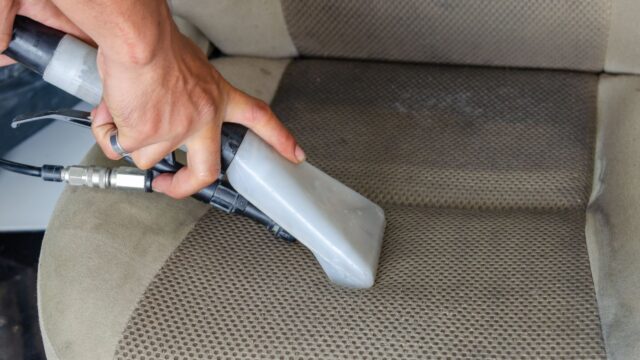
Once the car is dry, clean the affected areas so the smell does not linger. Vacuum thoroughly, then clean carpet and fabric with an upholstery or carpet cleaner made for automotive use, following the label. Use one product at a time and never combine cleaners. Avoid soaking the carpet again.
Sprinkling baking soda over dry carpet, leaving it for several hours or overnight and vacuuming it up can help absorb leftover odor. Replace the cabin air filter if it smells musty or looks dirty, since it can hold moisture and spores. If the vents still smell after the filter change, a vent and evaporator cleaner sold for car AC systems, or a service at a shop, can treat the evaporator. For more ways to tackle stubborn odors once the source is fixed, see this guide on getting smells out of a car.
If you see visible mold growth over a large area, or the padding has been wet for a long time, replacing the padding is often more effective than cleaning it. People with allergies, asthma or weakened immune systems should avoid doing heavy mold cleanup themselves. The site’s mold cleanup calculator can help you judge whether an affected area is small enough to handle on your own.
Keeping the smell from coming back
- Clear the cowl and sunroof drains a few times a year, especially in autumn when leaves fall.
- Wipe door and trunk seals with a damp cloth and treat rubber seals with a rubber care product to keep them supple.
- Switch the AC off a few minutes before you park while leaving the fan running, which helps dry the evaporator.
- Replace the cabin air filter at the interval in your owner’s manual.
- Run the AC occasionally in winter as well; it dehumidifies the air and helps keep windows and the cabin drier. Seasonal care tips are in this guide to winterizing your car.
Quick answers
Is a musty smell in the car harmful?
A faint smell from a small damp patch is mainly unpleasant, but ongoing mold growth can irritate the nose, throat and lungs and is more of a concern for people with allergies or asthma. Fixing the leak and drying the car promptly is the best protection.
Why does the car smell musty only when the AC is on?
That usually points to moisture and mildew on the AC evaporator or a dirty cabin air filter rather than a body leak. Replace the filter first, then treat or service the evaporator if the smell continues.
Can I just use an air freshener or odor bomb?
Fresheners and odor foggers only cover or reduce the smell for a while. If the carpet padding is still wet or water keeps getting in, the smell will return. Fix the leak and dry the interior first.