How Much Laundry Detergent to Use: Liquid, Powder, Pods and HE Machines
Most households use too much detergent, and in modern low-water washers that means residue, odors and stiff laundry. The cap lines and your water hardness tell you the right dose.
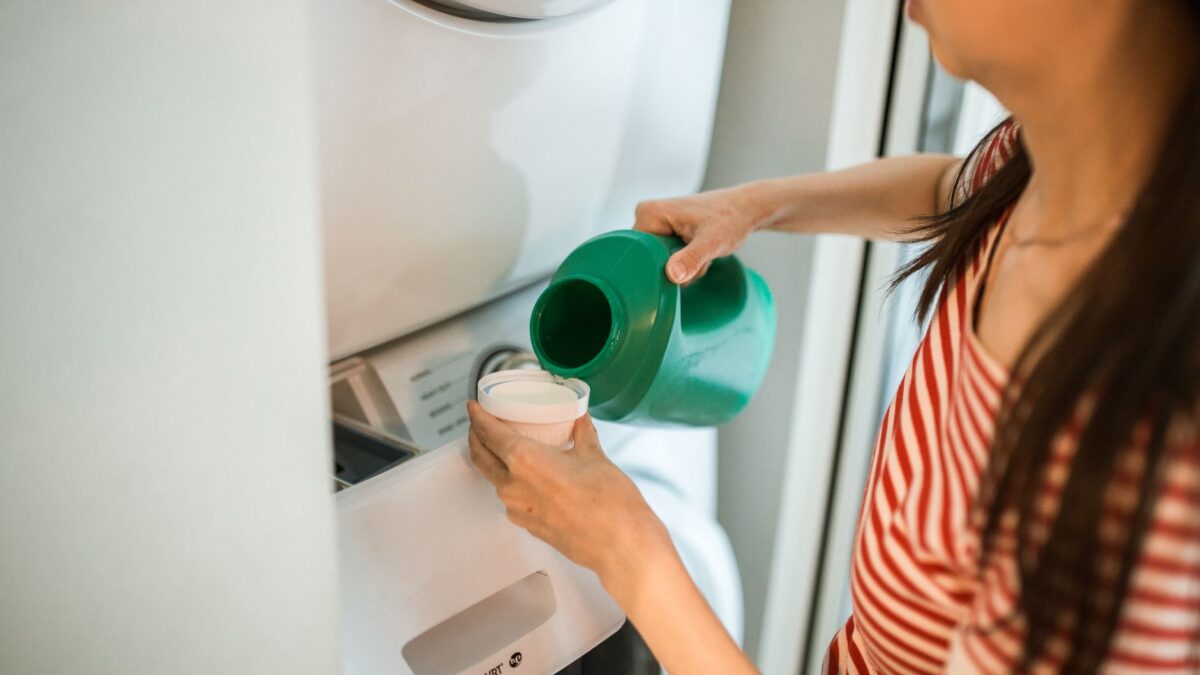
For a normal load, use the amount marked on the detergent package for a medium load, which is often the first or lowest line on the cap, not a full cap. Use more only for large, heavily soiled loads or hard water, as the label directs. For pods, use one pod per normal load unless the package says otherwise. In high-efficiency (HE) machines, use only detergent with the HE mark. Too much detergent does not clean better; it leaves residue that causes odors, stiff fabric and a dirty washer.
Detergent is concentrated, and modern washers, especially HE front loaders and top loaders, use far less water than older machines. Whatever does not rinse out stays in your clothes and the machine.
Signs you are using too much detergent
- Clothes or towels feel stiff, slick or slightly sticky
- Laundry smells musty soon after washing, or the washer smells
- Suds remain in the drum at the end of the cycle, or the machine shows a suds error
- White residue or streaks on dark clothes
- Towels absorb water poorly
- Buildup or slime in the detergent drawer and door seal
Appliance makers point to excess detergent as a common cause of washer odor. Whirlpool’s odor guidance, for example, says to use HE detergent and never exceed the recommended amount.
How to dose correctly
- Read the dosing chart on the package. It gives amounts by load size and soil level, and often by water hardness.
- Use the cap lines, not the full cap. Caps usually hold much more than one dose.
- Start low. For normal, lightly soiled loads, try the smallest recommended amount and see whether results change.
- Adjust for hard water. Hard water minerals reduce detergent performance, and many labels recommend a higher dose. Soft water needs less.
- Adjust for the load, not the drum size: a full drum of lightly worn clothes needs less than a half-load of muddy sports kit.
- Add detergent where the manual says. Liquid and powder usually go in the dispenser; pods usually go in the empty drum before clothes.
Liquid vs powder vs pods
| Type | Pros | Cons |
|---|---|---|
| Liquid | Easy to pretreat stains; dissolves well in cold water; flexible dosing | Easy to overpour; caps hold more than one dose |
| Powder | Often lower cost per load; many contain oxygen bleach; flexible dosing | Can leave residue in cold water or if overdosed |
| Pods or packets | Pre-measured; convenient | Fixed dose (too much for small loads); serious poisoning risk for young children and some adults with dementia |
| Sheets or strips | Light, little packaging; pre-measured | Fixed dose; check that they are suitable for your machine and soil level |
None is automatically better. Liquid and powder let you match the dose to the load, which is the easiest way to avoid overdosing. Pods are convenient but cannot be split.
What the HE mark means
HE detergents are formulated to produce fewer suds for high-efficiency washers, which use less water. Look for the HE logo on the package. Using regular detergent in an HE machine can create too many suds, leading to poor rinsing, residue and odors. HE detergent works in standard machines too.
Laundry pod safety
Liquid laundry packets are small, colorful and soft, and young children can mistake them for candy or toys. The CPSC lists ASTM F3159 as the voluntary safety standard for liquid laundry packets; it is aimed at reducing unintentional exposures, especially in children, and covers the packets, their packaging and labeling. A standard reduces risk but does not remove it, so:
- Keep packets in their original container, closed, and stored up high, out of reach and out of sight of children.
- Do not let children handle or play with packets, or help load them.
- Handle pods with dry hands, since the film dissolves when wet.
- Close the container right after use, and do not puncture or cut a pod.
- Consider liquid or powder detergent if you have young children, or an adult with dementia or cognitive impairment in the home.
If someone swallows, inhales or gets a cleaning product in the eyes, call Poison Control at 1-800-222-1222 (US) or emergency services. For eye contact, rinse with water while you call. Never mix detergent with bleach-containing products outside the washer, and keep all laundry products in their original containers.
Too much detergent already? How to fix it
- Rewash affected clothes in warm water (if the label allows) with no detergent, or run an extra rinse.
- Clean the washer with its cleaning cycle and the product your manual recommends; see how to clean a washing machine.
- Wipe the door seal and drawer. Residue collects there; see cleaning a front-load washer gasket.
- Cut your dose going forward and add only when results show you need it.
Towels are especially sensitive to residue. If yours smell sour, the reset in getting the smell out of towels helps.
Bottom line
Follow the package’s dosing chart, start with the lowest line for normal loads, and use more only for big, dirty loads or hard water. Use HE detergent in HE machines and one pod per normal load. Store pods closed, high and out of sight of children. Less detergent usually means cleaner clothes, a fresher washer and lower costs.
FAQ
Should I use two pods for a large load?
Only if the package says so for large or heavily soiled loads. Many say one pod per load.
Does more detergent get clothes cleaner?
No. Beyond the right dose, extra detergent does not rinse out well and can leave clothes dingier and smellier.
Can I use regular detergent in an HE washer?
Machine makers say to use HE detergent. Regular detergent can over-suds and leave residue.
How do I know if I have hard water?
Signs include scale on faucets and kettles and spots on glassware. Your water utility can usually tell you the hardness of your supply.