How to Clean Patio Furniture by Material: Plastic, Wicker, Metal, Teak and Cushions
One bucket of soapy water handles most outdoor furniture. Here is what each material needs beyond that, how to deal with mildew on cushions, and how to store it all for winter.
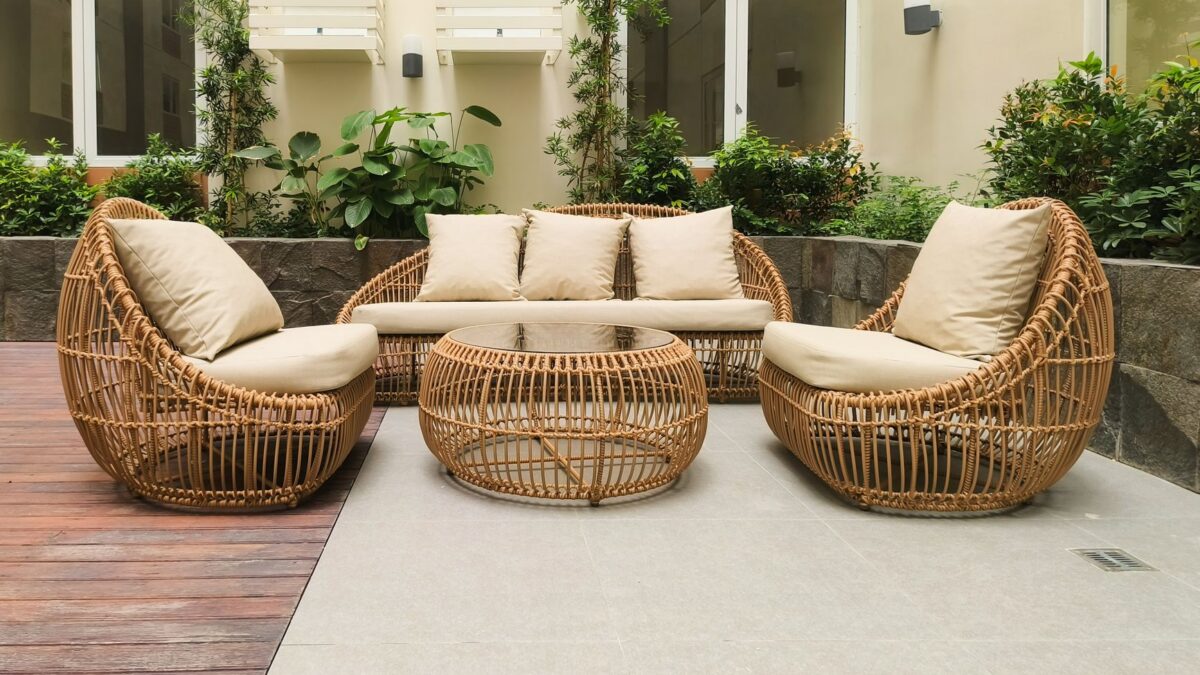
For almost any patio furniture, start with a bucket of warm water and a few squirts of dish soap, a soft brush and a gentle rinse from a garden hose. Then adjust for the material: plastic and resin can take a little baking soda for scuffs, metal needs drying and rust touch-ups, teak should be scrubbed with the grain and natural wicker should stay as dry as possible. Check the care tag or maker’s instructions before using bleach or a pressure washer on anything.
Most outdoor pieces only need a proper clean at the start of the season, a quick wipe now and then, and a final clean before storage. Here is how to do each type.
What you need
- Dish soap and a bucket of warm water
- A soft-bristle brush and a non-scratch sponge
- Baking soda
- A garden hose with a spray nozzle
- Microfiber cloths or old towels for drying
- Rubber gloves
- Optional: a vacuum with a brush attachment, fine sandpaper or steel wool for rust, and any cleaner the furniture maker recommends
Patio furniture by material
| Material | Clean with | Avoid |
|---|---|---|
| Plastic and resin | Dish soap and water; baking soda paste on scuffs | Abrasive pads and harsh solvents that dull or scratch the surface |
| Resin (synthetic) wicker | Soapy water, soft brush, gentle hose rinse | High-pressure spray that can loosen strands from the frame |
| Natural wicker, rattan, rush | Vacuum, then a barely damp cloth; dry quickly | Soaking, hosing or leaving it out in the rain |
| Aluminum (including powder-coated) | Dish soap and water, soft cloth | Strong alkaline or abrasive cleaners that can dull or pit the finish |
| Wrought iron and steel | Soapy water, thorough drying, rust touch-up | Leaving it wet; ignoring chips in the paint |
| Teak and other hardwoods | Soft brush and soapy water, scrubbing with the grain | Wire brushes and pressure washing, which raise and gouge the grain |
| Glass tabletops | Soapy water, then a glass cleaner or water and a squeegee | Scouring powders |
Plastic and resin furniture
- Hose off loose dirt, leaves and cobwebs.
- Scrub with soapy water and a soft brush, paying attention to textured seats where grime collects.
- Treat scuffs and gray film with a paste of baking soda and water on a damp sponge. Rub gently, then rinse.
- Rinse and dry in the sun.
White plastic that has turned chalky is usually sun-damaged on the surface. Cleaning helps, but it will not fully restore the color. If you are thinking about diluted bleach for stains, check that the maker allows it on that plastic, use it only as the bleach label directs, rinse thoroughly and never mix it with any other cleaner.
Wicker: resin vs natural
Resin wicker (plastic strands woven over a frame) is built to live outside. Brush soapy water into the weave, let a soft brush work the gaps, then rinse with a gentle hose spray, not a jet. Tip the piece so water drains out of the frame.
Natural wicker, rattan and rush are plant fibers. Vacuum with a brush attachment, then wipe with a cloth wrung out in soapy water until it is barely damp. Dry it quickly in a breezy, shaded spot. Keep natural wicker on a covered porch or indoors when it rains.
Metal furniture
Aluminum needs only mild dish soap and water. Dry it so water spots do not form. A coat of car wax on powder-coated frames can help water bead off; test it on a hidden spot first.
Wrought iron and steel rust where paint is chipped. After washing and drying:
- Rub rust spots with fine steel wool or sandpaper until you reach clean metal.
- Wipe off the dust with a dry cloth.
- Touch up with a rust-inhibiting primer and outdoor metal paint, following the can for dry times and ventilation.
Rust that has dripped onto the patio can be treated with the methods in our guide to removing rust stains.
Teak and hardwood furniture
Untreated teak weathers to a silver-gray color on its own. That is a surface change, not rot, and many owners like it. To clean it:
- Wet the wood with a hose.
- Scrub with a soft brush and soapy water, always with the grain.
- Rinse well and let it dry in partial shade so it dries evenly.
If you want to keep the honey color, makers offer teak cleaners, oils and sealers. Advice differs: some makers recommend oil, while others say oil can hold dirt and encourage mildew on outdoor teak and prefer a sealer or nothing at all. Follow the instructions from your furniture’s manufacturer. Never pressure-wash hardwood furniture; it tears up the soft grain and leaves a rough surface.
Cushions and mildew
Start with the care tag. Some covers unzip and can go in the washing machine; others are spot-clean only.
- Brush off dry dirt and debris first. Mildew tends to grow on dirt and food residue sitting on the fabric.
- Sponge with soapy water (a mild detergent in warm water), working the whole surface rather than one spot so you do not leave a ring.
- Rinse thoroughly with a hose until no suds remain.
- Dry completely by standing cushions on their edge in the sun so water drains out. Foam that stays damp inside is where mildew starts.
For mildew on solution-dyed acrylic outdoor fabrics, some makers publish a diluted bleach-and-soap recipe; Sunbrella’s care sheet is one example. Use that only on fabrics whose maker allows it, follow their recipe and the bleach label exactly, work outside, and rinse well. Do not use bleach on fabrics that do not list it, and never mix bleach with vinegar, ammonia or other cleaners. For a refresher on the difference between surface mildew and mold that has grown into the material, see black mold vs. mildew. Cushions with mold deep in the foam and a persistent musty smell are often better replaced.
Wear gloves when handling moldy items, and keep cleaning products in their original containers and away from children and pets.
If someone swallows, inhales or gets a cleaning product in the eyes, call Poison Control at 1-800-222-1222 (US) or emergency services.
Storing patio furniture for winter
- Clean and dry everything first. Dirt and moisture under a cover are an invitation to mildew.
- Bring cushions indoors or into a dry shed or garage, stored in breathable bags or bins with a little air space rather than sealed plastic.
- Use breathable furniture covers if pieces stay outside, and lift them slightly off wet ground so water does not pool.
- Store natural wicker indoors. It does not tolerate freeze and thaw cycles well.
- Stack resin chairs with a cloth between them to prevent scratching.
- Keep the space tidy. Our guide to organizing a garage has ideas for making room for outdoor pieces.
Bottom line
Warm water, dish soap and a soft brush clean nearly every patio material. Dry metal and cushions completely, scrub teak with the grain, keep natural wicker out of the rain and save bleach for fabrics and plastics whose maker allows it. A thorough clean before winter makes spring cleanup much quicker.
FAQ
Can I pressure-wash patio furniture?
It is risky for most pieces. High pressure can gouge wood, strip paint, loosen wicker strands and force water into cushions. A hose and a soft brush are safer; if your furniture maker allows pressure washing, use the lowest setting and a wide fan tip.
How do I clean plastic chairs that have turned gray?
Wash with soapy water, then rub with a baking soda paste and rinse. If the plastic is chalky from sun damage, cleaning will improve it but may not restore the original color.
Should I oil my teak furniture?
It depends on the maker. Some recommend teak oil, others recommend a sealer or leaving the wood to weather naturally. Follow your furniture’s care instructions.
How often should I clean outdoor cushions?
Brush them off regularly, wipe spills right away and give them a full wash at the start and end of the season, or whenever you see mildew spots.