How to Clean a Microwave With Steam, Plus Stains, Smells and Filters
A bowl of water and a few minutes of steam loosen almost everything inside a microwave. Here is the method, plus what to do about stubborn stains, lingering smells and the filters on over-the-range models.
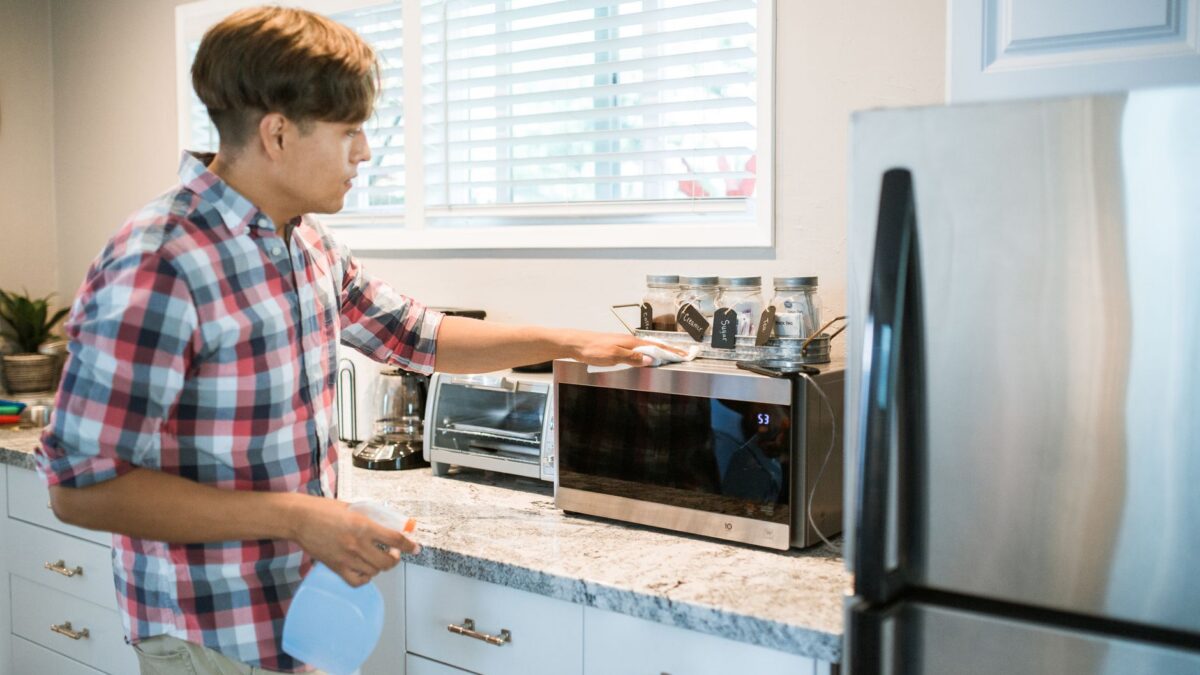
The fastest way to clean a microwave is to heat a microwave-safe bowl of water (with a few lemon slices or a spoonful of white vinegar if you like) for about 3 to 5 minutes until it steams heavily, leave the door closed for a few more minutes, then wipe the softened splatters off with a damp cloth and dish soap. Use a soft sponge, never steel wool or metal scourers, and take care: the bowl and water will be very hot.
Steam does most of the work, so you rarely need anything stronger than dish soap. Stains, smells and filters need a bit more attention, covered below.
What you need
- A microwave-safe glass or ceramic bowl
- Water, plus half a lemon or about a tablespoon of white vinegar (optional)
- A wooden spoon or toothpick
- Dish soap, a soft sponge and microfiber cloths
- Baking soda (for stains and smells)
- Oven mitts
Step-by-step steam clean
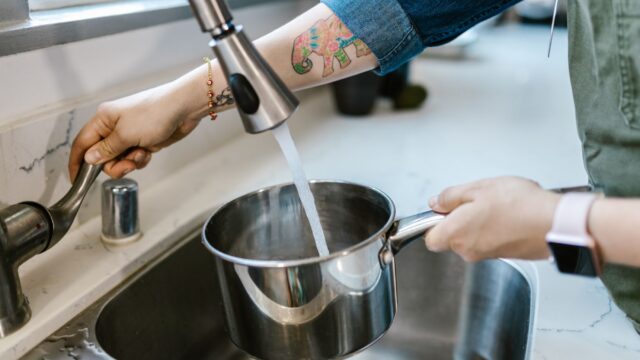
- Fill the bowl with about a cup of water. Add lemon slices or a tablespoon of white vinegar if you want help with grease or smell. Plain water also works.
- Add a wooden spoon or toothpick to the bowl. It gives bubbles somewhere to form and reduces the chance of superheated water boiling over suddenly.
- Heat on high for 3 to 5 minutes, until the window fogs and the water is boiling. Time varies with wattage.
- Leave the door closed for 3 to 5 minutes so the steam keeps softening dried-on food.
- Remove the bowl with oven mitts. Lift it gently and keep your face away from the rising steam.
- Take out the turntable and its roller ring and wash them in warm soapy water, or in the dishwasher if your manual allows it.
- Wipe the ceiling, walls and floor with a damp sponge and a little dish soap, top to bottom.
- Wipe the door, seal and keypad with a barely damp cloth. Don’t spray liquid directly into vents or onto the control panel.
- Dry everything and leave the door open for a few minutes.
Stubborn stains
Yellow turmeric or curry stains
Turmeric is a strong dye that sticks to plastic interiors and turntables. Wipe it off as quickly as possible. For set stains, a baking soda paste rubbed gently with a soft cloth can lighten them; on a glass turntable you can let the paste sit for 15 minutes. Some yellow tinge on plastic parts may be permanent and is harmless.
Orange tomato sauce stains
Tomato pigment behaves like turmeric. Steam, then dish soap, then a baking soda paste is the order to try. Covering bowls with a microwave-safe lid or a paper towel stops most of these splatters in the first place.
Exploded food
Eggs, potatoes and thick soups can splatter the whole cavity. Let the microwave cool, remove large pieces with a paper towel, then do the full steam clean. Pierce potato skins and egg yolks before heating, and stir soups partway through.
Getting rid of smells
- Clean first: odors usually come from residue you can see, or from the turntable underside.
- Steam a bowl of water with lemon slices, then wipe.
- Leave an open dish of baking soda inside overnight with the door closed, then remove it before using the microwave.
- For burnt popcorn, repeat the steam clean and air the microwave with the door open for a few hours.
What is safe and what damages a microwave
| Safe | Avoid |
|---|---|
| Water or lemon/vinegar steam | Steel wool and metal scourers (scratch the interior and leave metal bits) |
| Dish soap and a soft sponge | Abrasive powders and gritty pads |
| Baking soda paste, gently | Oven cleaner and chlorine bleach |
| Damp cloth on keypad and seal | Spraying liquid into vents or the control panel |
| Microfiber to buff stainless doors | Running the microwave empty |
Never run the microwave empty while cleaning. If your interior is scratched through the paint or the cover inside the cavity (often a mica-like panel called the waveguide cover) is damaged, check the manual or call service before using it.
Over-the-range microwave filters
Microwaves mounted over the stove double as a range hood, and they usually have two kinds of filters:
- Grease filters (metal mesh on the underside). Whirlpool-family brands suggest cleaning them about monthly, or when a filter indicator prompts you, with mild soap and water. Many are dishwasher-safe, but confirm in your owner’s manual. Soaking in hot, soapy water for a while helps with heavy grease.
- Charcoal filters (on recirculating models, usually behind the top vent grille). These cannot be washed. Manufacturers generally recommend replacing them about every 6 months.
Our guide to cleaning stainless steel appliances covers the microwave door and handle if they are stainless.
Chemical safety
If you use any commercial cleaner, choose one labeled for microwave interiors, follow the label, rinse with a damp cloth so no residue heats up with food, and keep the kitchen ventilated. Never mix cleaning products, and never mix bleach with vinegar or any acid. If someone swallows, inhales or gets a cleaning product in the eyes, call Poison Control at 1-800-222-1222 (US) or emergency services.
How often to clean
Wipe up spills the day they happen and do a steam clean every week or two if you use the microwave daily. Fitting it into a routine is easier with a plan like our weekly cleaning schedule.
Bottom line
Steam a bowl of water for a few minutes, wait, then wipe with dish soap and a soft sponge. Baking soda handles most stains and smells, metal scourers and oven cleaner do more harm than good, and over-the-range models need their grease filter washed and their charcoal filter replaced on schedule.
FAQ
Is lemon or vinegar better for steaming a microwave?
Both work. Plain water does most of the loosening; lemon leaves a fresher smell and vinegar can help with grease. Pick whichever you have.
Can I put the turntable in the dishwasher?
Many glass turntables are dishwasher-safe, but check your manual. Let it cool first; putting a hot glass tray in cold water can crack it.
Why did the water boil over when I took it out?
Water heated in a smooth container can superheat and erupt when disturbed. A wooden spoon in the bowl and a short rest before removing it reduce the risk.
How do I clean the microwave vent?
On over-the-range models, wash the metal grease filter and replace the charcoal filter on the schedule in your manual. Countertop models usually only need their outer vent slots dusted and wiped.