How to Clean a Dishwasher: Filter, Spray Arms, Door Seal and Smells
Most dishwasher problems, from dirty dishes to a sour smell, trace back to a clogged filter. Here is a monthly routine that takes about 20 minutes, plus what to know before running vinegar.
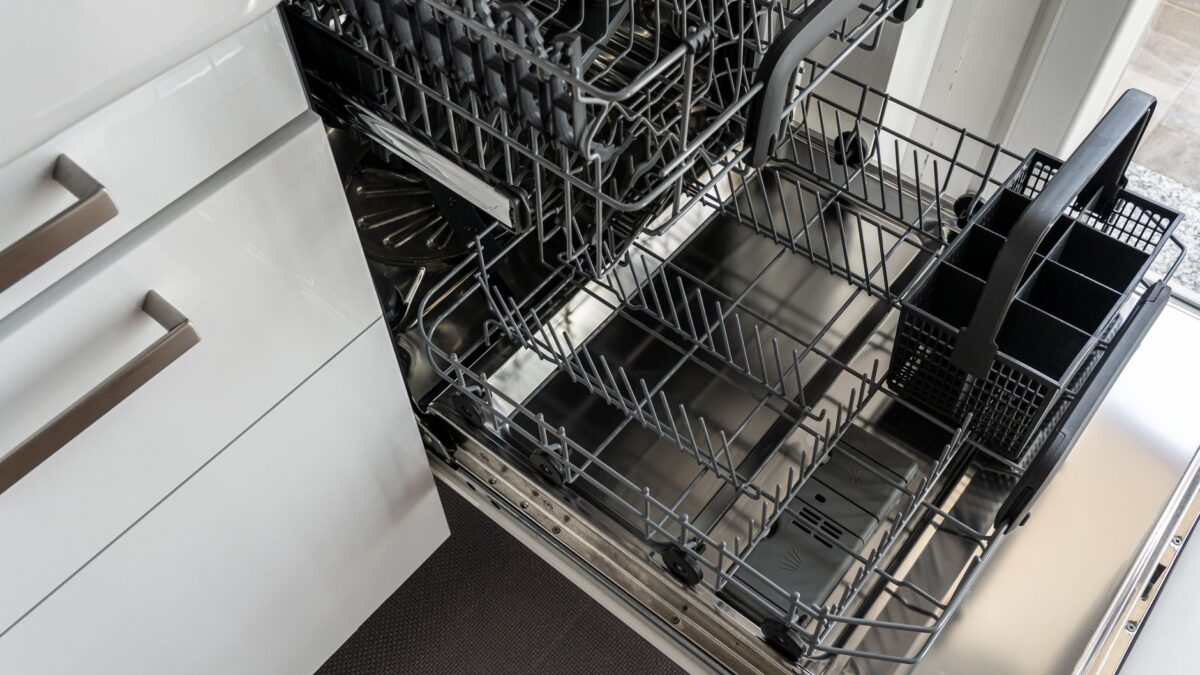
To clean a dishwasher, remove and rinse the filter under warm running water (a soft brush and dish soap for grease), check the spray arm holes for blockages, wipe the door gasket and edges, then run an empty hot cycle with a dishwasher cleaner made for the purpose. If you run the dishwasher daily or have hard water, clean the filter about once a month. Check your manual before using vinegar, and never combine vinegar or any cleaner with chlorine bleach.
Many modern dishwashers use a manual filter rather than a self-cleaning grinder, so food particles collect until you remove them. A clogged filter means dirty water recirculates, leaving grit on dishes and a sour smell.
What you need
- Your owner’s manual (or the model number to look it up)
- Dish soap and a soft brush or old toothbrush
- Microfiber cloths
- A toothpick or wooden skewer
- A dishwasher cleaner product, or citric acid–based cleaner, used per its label
- Rubber gloves
Step-by-step monthly clean
- Empty the dishwasher and pull out the bottom rack.
- Remove the filter. On many models it twists counterclockwise and lifts out from the floor of the tub, sometimes with a flat mesh plate underneath. Follow your manual.
- Rinse the filter under warm running water. If greasy, soak it in hot soapy water for 10 to 15 minutes, then scrub gently with a soft brush. Don’t use wire brushes or scouring pads, which can tear the mesh.
- Check the filter housing and the sump area for bits of glass, bones, labels or fruit pits, and remove them carefully with gloves on.
- Clear the spray arms. Spin each by hand; it should turn freely. Poke debris out of the holes with a toothpick. Many arms unclip or unscrew for rinsing; check the manual.
- Wipe the door gasket and the door edges, including the bottom edge below the gasket, where food and drips collect. Warm soapy water is enough.
- Wipe the detergent dispenser and the rinse-aid cap.
- Reinstall the filter so it locks fully. A loose filter lets debris into the pump.
- Run a cleaning cycle. Place a dishwasher cleaner in the empty machine per its label and run the hottest cycle.
Dishwasher cleaner, vinegar or citric acid?
| Option | Good for | Cautions |
|---|---|---|
| Dishwasher cleaner tablets or liquids | Grease, mineral film, routine monthly cleaning | Follow label; use in an empty machine; one product at a time |
| Citric acid (some cleaners are based on it) | Hard-water scale and white film | Follow the product label; don’t combine with chlorine bleach |
| White vinegar in a cup on the top rack | Light film and odor | Check the manual first; some cleaning guides warn that frequent, repeated exposure may wear rubber seals and hoses. Never use with bleach. |
| Chlorine bleach | Some manuals permit it for mold, in specific amounts | Use only if your manual specifically allows it, in the amount it states; never with vinegar, citric acid or other cleaners |
Because vinegar and chlorine bleach release toxic chlorine gas when combined, run them on different days with a plain rinse cycle in between if your manual allows both. In practice, a purpose-made dishwasher cleaner avoids the question. For the full list of dangerous combinations, see never mix these cleaning products.
Fixing a smelly dishwasher
- Clean the filter first; it is the usual source.
- Check the drain hose connection or the garbage disposal it drains into. A disposal that is not cleared can push dirty water back. Our guide to garbage disposal smells covers that side.
- Wipe the gasket and door bottom, where mildew grows.
- Leave the door ajar for an hour or so after a cycle to let moisture escape, if children and pets can’t reach it.
- Run the kitchen tap hot before starting a cycle so the dishwasher fills with hot water from the start.
White film and cloudy glasses
White, chalky film is usually hard-water minerals. Use rinse aid, make sure any built-in water softener is set for your water hardness (if your model has one), and run a descaling cleaner. A film that wipes off with a finger and feels greasy may be detergent residue from overdosing; try using less. Etching, a permanent cloudiness on glassware that won’t wash off, is damage to the glass and can’t be cleaned away.
How often to clean each part
| Part | How often |
|---|---|
| Filter | About monthly with daily use, or as your manual says |
| Door gasket and edges | Weekly wipe |
| Spray arms | Check monthly, clean when holes look blocked |
| Cleaning cycle | Monthly, or when film or odor appears |
| Exterior and control panel | Weekly, with a damp cloth |
For stainless dishwasher fronts, see how to clean stainless steel appliances to avoid streaks.
Chemical safety
Use one cleaning product at a time and follow its label exactly. Wear gloves, keep the kitchen ventilated, and keep tablets and pods in their original containers out of reach of children and pets. If someone swallows, inhales or gets a cleaning product in the eyes, call Poison Control at 1-800-222-1222 (US) or emergency services.
Bottom line
Clean the filter about monthly, keep the spray arm holes clear, wipe the gasket and door edges, and run a dishwasher cleaner on an empty hot cycle. Check your manual before using vinegar or bleach, and never use the two together.
FAQ
Does my dishwasher have a filter?
Most do. Older models often had a self-cleaning grinder, but many current ones use a removable filter in the bottom of the tub. Your manual shows where it is and how it comes out.
Can I clean my dishwasher with baking soda?
Sprinkling baking soda on the tub floor and running a short cycle can freshen it, but it won’t remove mineral scale. Don’t combine it with other cleaners in the same cycle.
Why are my dishes still gritty after a wash?
A clogged filter, blocked spray arms or overloading are the common causes. Clean the filter first, then check that the arms spin freely.
Is it safe to use bleach in a dishwasher?
Only if your manual specifically says so, and only in the way it describes. Never use bleach in the same cycle or close sequence as vinegar, citric acid cleaners or other products.