How to Clean a Cast Iron Skillet, Remove Rust and Re-Season It
Cast iron is easy to care for once you know the rules: a quick wash, immediate drying and a thin coat of oil. Rust is fixable, and yes, a little dish soap is fine.
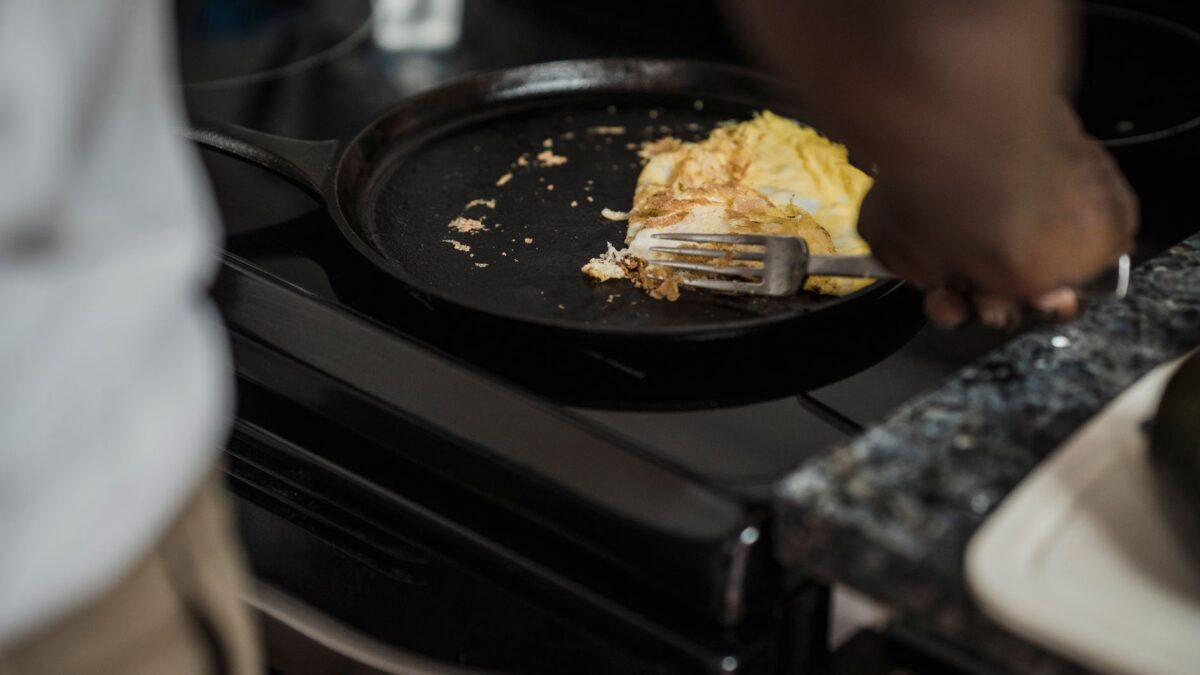
To clean a cast iron skillet, wash it while warm with hot water and a brush or non-scratch scrubber (a little mild dish soap is fine), dry it immediately with a towel or over low heat, then rub in a very thin layer of cooking oil. Don’t soak it, don’t put it in the dishwasher and don’t let it air-dry. If it rusts, scrub the rust off, wash, dry and re-season it in the oven.
Cast iron’s nonstick surface comes from seasoning: layers of oil baked on until they polymerize into a hard coating. Good cleaning protects that layer; bad habits strip it and invite rust.
What you need
- A stiff brush, pan scraper or non-scratch scrub pad
- Hot water and mild dish soap (optional)
- Coarse kosher salt for stuck-on food
- A dry towel or paper towels
- A neutral cooking oil with a high smoke point, or shortening
- For rust: steel wool or a stiff metal scrubber
Everyday cleaning
- Clean while the pan is still warm, not scorching hot.
- Scrape out food with a pan scraper or wooden spatula.
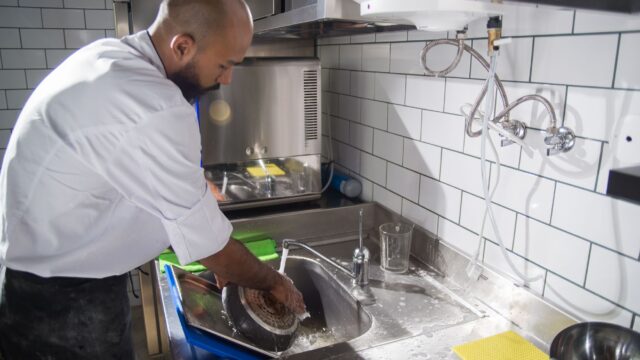
- Wash with hot water and a brush. Add a small amount of dish soap if the pan is greasy.
- For stuck-on bits, scrub with a paste of coarse salt and a little water, or simmer some water in the pan for a few minutes and scrape again.
- Dry immediately and completely. Set the pan on a low burner for a minute or two to drive off moisture.
- Oil lightly. While warm, rub in a few drops of oil with a paper towel and wipe off the excess until the surface looks dark and barely glossy, not wet.
The soap myth
The idea that soap ruins cast iron comes from old lye-based soaps, which could strip seasoning. Lodge, a long-established US cast iron maker, says on its care pages that you can use mild dish soap. Properly polymerized seasoning is not ordinary grease, and a short wash with dish soap does not remove it. What does damage it is long soaking, harsh scouring on a well-seasoned pan, and the dishwasher.
What never to do
| Habit | Why it hurts |
|---|---|
| Soaking in the sink | Water reaches bare iron and rust starts fast, sometimes overnight |
| Dishwasher | Strips seasoning and leaves the pan rusty |
| Air-drying on a rack | Leaves moisture in pores and on the rim, causing rust spots |
| Storing with the lid on | Traps humidity; store lid off or with a paper towel between |
| Thick oil layers | Go sticky or gummy instead of hardening |
| Plunging a very hot pan into cold water | Thermal shock can crack or warp cast iron |
Long simmering of very acidic foods, like tomato sauce or wine reductions, can also wear away thin seasoning. A well-seasoned pan handles short cooking times fine.
How to remove rust
Surface rust looks bad but usually isn’t the end of the pan.
- Scrub the rusty area with steel wool or a stiff metal scrubber and a little soapy water until you reach bare, gray metal. Lodge notes soap and scouring are fine at this stage, because you are about to re-season.
- Rinse and dry immediately with a towel, then on a low burner.
- Re-season using the oven method below.
Deep pitting or cracks are another matter. A cracked pan should be retired.
Rust stains on other things, such as a sink or a countertop where the pan sat, need different treatment; see how to remove rust stains.
How to re-season cast iron in the oven
- Start with a clean, completely dry pan.
- Apply a very thin coat of oil or melted shortening to every surface, inside, outside and handle.
- Wipe off as much as you can, as if you made a mistake. Too much oil turns sticky.
- Place it upside down on the middle rack, with a sheet of foil or a baking sheet on the rack below to catch drips.
- Bake for about an hour at a high oven temperature, commonly around 450°F; some older guides use 350 to 400°F. If your pan’s maker gives a temperature, use that.
- Turn off the oven and let the pan cool inside.
- Repeat two or three times for a darker, more durable finish.
Run the range hood and open a window; oil smokes at these temperatures. Keep pet birds out of the kitchen while anything is smoking.
Enameled cast iron is different
Enameled pots and skillets don’t need seasoning and don’t rust on the enameled surfaces. Wash with warm soapy water, use nylon pads rather than metal scourers, and see our guide to cleaning a burnt pan for scorched enamel.
Bottom line
Wash cast iron warm, with hot water and a little soap if you like, dry it immediately and oil it lightly. Never soak it or put it in the dishwasher. Rust comes off with steel wool, and an hour in a hot oven with a thin oil coat restores the seasoning.
FAQ
Can I use dish soap on cast iron?
Yes. Modern mild dish soap doesn’t remove polymerized seasoning. Lodge says soap is acceptable. Just don’t soak the pan.
What oil is best for seasoning?
Any neutral cooking oil or shortening works. Thin coats matter more than the type of oil.
Why is my cast iron sticky?
Too much oil was applied or it wasn’t heated long enough to polymerize. Bake it upside down in a hot oven for an hour to harden the coating.
Is a rusty cast iron pan safe to cook in?
Scrub away the rust and re-season before cooking. A little light rust removed this way is common and the pan can be used normally afterward.