How to Unclog a Kitchen Sink and Garbage Disposal Safely
Most clogged kitchen sinks clear with hot water, a plunger or a hand-cleaned trap. Here are the safe steps for the sink and disposal, and when to call a plumber.
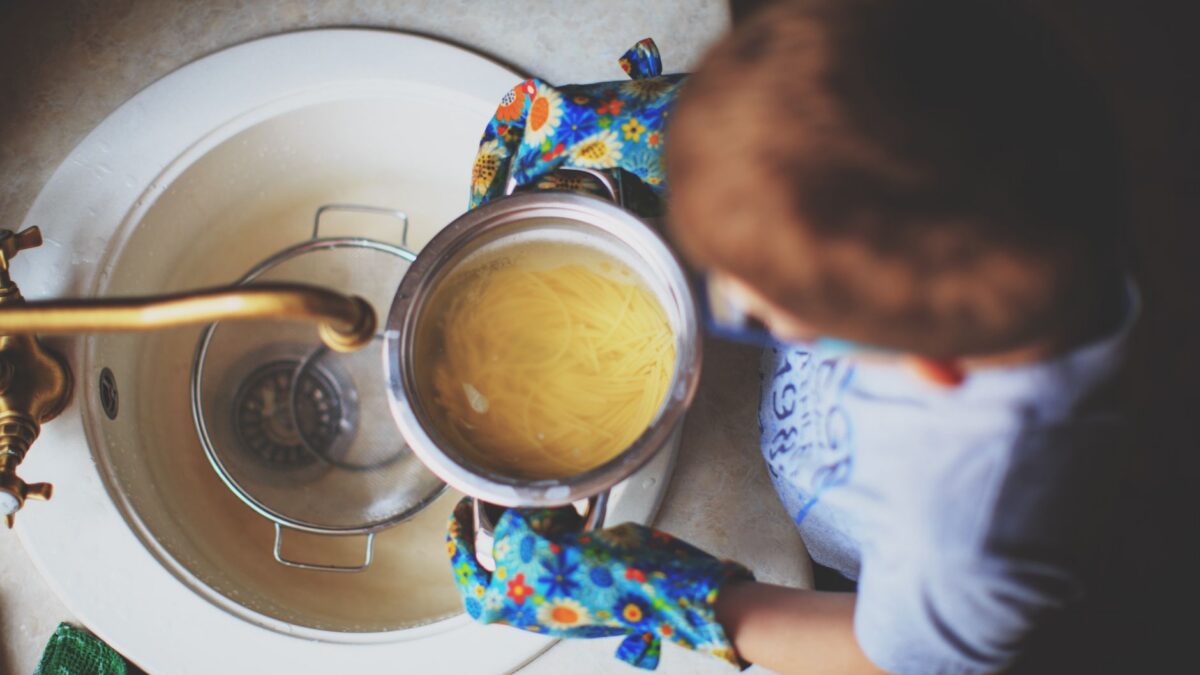
A clogged kitchen sink usually clears with a plunger, a hand-cleaned P-trap or a drain snake, and none of those needs chemicals. If a garbage disposal sits in the drain, turn off its power first and never put your hand inside the chamber. Grease, food scraps and coffee grounds cause most kitchen clogs, and they build up in the trap and the horizontal pipe behind it.
Start with the simplest fix and work up. Skipping straight to a chemical drain cleaner is the step most likely to cause trouble, for the reasons below.
What causes a kitchen sink to clog?
Grease and food residue stick to the inside of the pipe and narrow it a little with every wash. Cooking fat is liquid when hot and hardens as it cools, so it coats the pipe walls and catches starchy scraps such as rice, pasta and potato peelings. Coffee grounds, eggshells and fibrous vegetables (celery, onion skins, corn husks) pack together in the trap.
If the sink drains slowly, gurgles or smells, the clog is usually partial and still close to the drain. If both sides of a double sink fill with water, the blockage is further down the line.
How do you unclog a kitchen sink without chemicals?
Work through these steps in order and stop when the water drains.
- Remove standing water with a cup if the sink is full, then clear any food from the strainer.
- Pour a kettle of very hot (not boiling) water down the drain if the sink is metal. For plastic pipes or a porcelain sink, use hot tap water instead.
- Use a cup plunger, not a flat toilet plunger. Fill the sink with a few inches of water so the cup is covered, block the overflow opening and the other drain of a double sink with a wet rag, and push down and pull up firmly for about 20 seconds.
- If the plunger does not work, place a bucket under the trap and unscrew the slip nuts by hand or with pliers. Empty the trap, rinse it, check the pipe on both ends for debris and reassemble with the washers seated flat.
- For a clog further in, feed a hand-crank drain snake into the wall pipe, turning the handle as you push until you feel it break through or hook the blockage.
Run hot water for a minute afterward and look under the sink for drips at each joint you touched.
How do you unclog a garbage disposal?
A disposal that hums but does not spin is jammed, and one that does nothing at all has usually tripped its reset button. Before any work, switch off the disposal at the wall switch and unplug it, or turn off its breaker if it is hard-wired. Never reach into the chamber, even with the power off. Use tongs or pliers to pull out what you can see with a flashlight.
Most disposals have a hex socket in the center of the underside. Insert the matching hex key (often supplied with the unit) and turn it back and forth until the flywheel moves freely. Then press the red reset button on the underside of the unit and restore power. Run cold water and switch the disposal on briefly.
If water still backs up, the clog is past the disposal, so use the plunger and trap steps above. Our guide on cleaning a garbage disposal covers what should never go in it, and the page on getting rid of a garbage disposal smell helps once the drain flows again.
Is it safe to use chemical drain cleaners?
Chemical drain cleaners are risky and are best avoided in a kitchen sink. They are caustic, can splash back on skin and eyes, and give off fumes. Never mix one with another cleaner, bleach or vinegar, and never use one right before or after a different product. If the drain does not clear, the cleaner sits in the standing water, and a plumber or you will then have to work around it.
If you have already used one, wear gloves and eye protection, do not plunge, and tell the plumber what product is in the pipe. Follow the label directions, ventilate the room and keep the product away from children and pets. For a swallowed product or a splash in the eyes, call Poison Control in the US at 1-800-222-1222 or emergency services. The U.S. Environmental Protection Agency publishes general guidance on household chemical products.
What about baking soda and vinegar?
Baking soda followed by vinegar fizzes, but it is gentle and works mainly on light residue and odors, not on a solid clog. Pour the baking soda in first, add the vinegar, wait 10 to 15 minutes and flush with hot water. Do not combine this with any commercial drain product, and do not use it as a first step before a plunger if you suspect a heavy blockage. A simple mix of dish soap and hot water can also help loosen grease before you plunge.
When should you call a plumber?
Call a plumber if more than one fixture in the house drains slowly, if water backs up into another sink or the tub when you run the kitchen sink, or if the trap and a snake do not clear the line. The same goes for a persistent smell, a cracked pipe, or any leak you cannot stop by tightening a joint. Those signs point to a blockage in the main drain or a vent problem, which needs a longer cable or a camera.
It also helps to know your layout. The cabinet below the sink holds the trap, the shutoff valves and sometimes the disposal, so it pays to keep that space clear, as our page on organizing under the kitchen sink explains. If drain smells continue after the clog is gone, see kitchen sink drain smell causes and fixes.
How do you keep the sink from clogging again?
- Wipe greasy pans with a paper towel and put the fat in the trash or a sealed container, not down the drain.
- Scrape plates into the trash or compost before washing.
- Use a mesh strainer in the drain opening and empty it daily.
- Run cold water while the disposal runs and for about 15 seconds after.
- Feed the disposal small amounts at a time, and keep fibrous, starchy and greasy food out of it.
Quick answers
Does hot water dissolve a grease clog?
Hot water can soften fresh grease, but the grease often hardens again further down the pipe where the water has cooled. It works best as a first step, followed by dish soap and a plunger.
Can I put ice or lemon peels in the disposal?
Ice and citrus peels are commonly used to freshen a disposal and are generally fine in small amounts. Bones, fibrous stalks, coffee grounds, grease and starchy foods are the usual causes of jams.
Why does my disposal hum but not turn?
A hum without movement means the grinding plate is stuck. Switch off and unplug the unit, free the flywheel with the hex key, then press the reset button before using it again.