How to Clean a Garbage Disposal: Splash Guard, Ice and What Not to Put In
A clean disposal starts with the rubber splash guard most people never scrub. Here's a safe routine, a reality check on popular hacks, and a list of what to keep out.
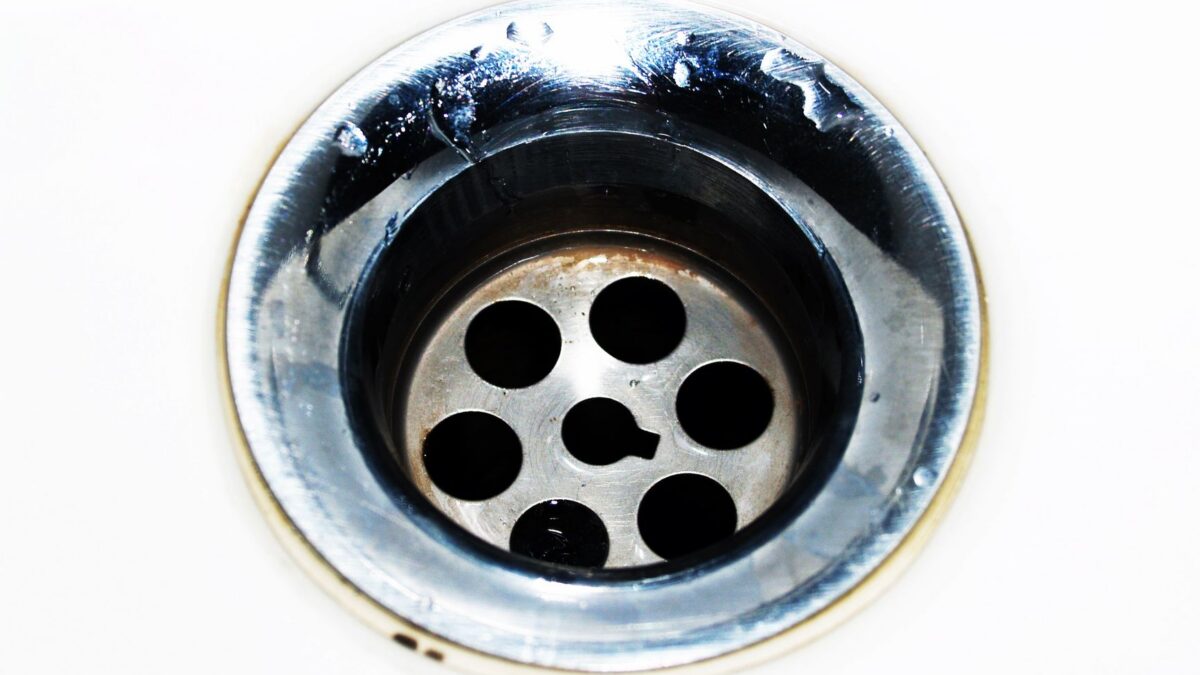
To clean a garbage disposal safely, turn it off at the switch and, ideally, unplug it or switch off its breaker, then scrub the rubber splash guard and the top of the grinding chamber with a brush and dish soap. Restore power and run a few handfuls of ice with cold water to knock debris off the chamber, then flush with more cold water. Never put your hand inside, even with the power off; use tongs or pliers to retrieve objects.
Why disposals get dirty
Food particles cling to the underside of the rubber splash guard (also called the baffle) and the walls of the grinding chamber. Grease coats everything and traps more debris. That film is the most common source of a smelly disposal. If smell is your main problem, our guide to getting rid of a garbage disposal smell goes into odor sources in more detail.
What you need
- A long-handled scrub brush or an old toothbrush
- Dish soap
- Baking soda
- A tray of ice cubes
- Coarse salt (optional)
- Tongs or needle-nose pliers for retrieving objects
- A flashlight
- Rubber gloves
How to clean a garbage disposal, step by step
- Cut the power. Turn off the wall switch. For extra safety, unplug the unit under the sink or switch off its breaker so it cannot be started by accident.
- Look inside with a flashlight. Remove anything that should not be there, such as a bottle cap or a fork, using tongs or pliers. Never reach in with your fingers.
- Clean the splash guard. Lift the flaps and scrub both sides with a brush and a few drops of dish soap in warm water. Many splash guards can be removed by pulling or twisting them out of the sink flange; check your model’s manual. A removable guard can be washed in the sink or, if the maker allows, the dishwasher.
- Scrub the top of the chamber. Sprinkle a little baking soda on a damp brush and scrub the upper walls you can reach through the opening.
- Restore power and run ice. With cold water running, feed in a couple of handfuls of ice cubes and run the disposal until it stops grinding. Ice helps scour residue off the chamber. Adding a handful of coarse salt gives a little extra scrubbing.
- Flush. Run cold water for 30 seconds or so after grinding.
- Clean the sink drain area around the flange with dish soap and a cloth.
Popular hacks: a reality check
| Hack | What it really does |
|---|---|
| Ice cubes | Helps knock debris off the chamber walls; a good routine clean |
| Ice and salt | Salt adds a bit of abrasion; fine occasionally |
| “Ice sharpens the blades” | Most household disposals use blunt impellers, not sharp blades, so there is nothing to sharpen |
| Citrus peels | Mostly leave a pleasant smell; they do not deep-clean, and large or fibrous peels should go in small pieces if at all |
| Baking soda and vinegar fizz | The fizz is mostly the two neutralizing each other; scrubbing does more. See what the fizz really does |
| Bleach down the drain | Not needed for routine cleaning; never mix it with vinegar, ammonia or drain cleaners |
| Chemical drain openers | Not recommended in a disposal; they can damage parts and splash back. Call a plumber for clogs |
What not to put in a garbage disposal
InSinkErator, a major disposal maker, says many “never put this in” rules are myths, but it is clear on a few items. Its guide to what not to put in a garbage disposal lists fats, oils and grease, which harden in pipes, as the biggest problem. Other general guidance:
- Fats, oils and grease: let them cool and put them in the trash.
- Non-food items: glass, metal, plastic, paper towels, cigarette butts.
- Chemicals and cleaning solvents.
- Large amounts at once: feed scraps gradually with cold water running, rather than packing the chamber.
- Very fibrous or stringy scraps (corn husks, artichoke leaves, large amounts of celery or onion skins) can wrap or clog on some models; check your manual.
- Coffee grounds and eggshells: InSinkErator says they will not harm the unit but can contribute to clogs in older or restricted pipes, so use plenty of water or compost them.
If the disposal hums or won’t turn
- Turn off the power at the switch and unplug or switch off the breaker.
- Look for an object jammed in the chamber and remove it with tongs.
- Many models have a hex socket on the bottom of the unit; turning it back and forth with the wrench provided by the maker can free a jam.
- Press the reset button on the bottom of the unit if it has one, restore power and test with cold water running.
- If it still hums, leaks, trips the breaker or the sink won’t drain, stop and call a plumber. For a slow sink drain, see how to unclog a drain without chemicals.
How often to clean it
- Every use: run cold water during and for a short time after grinding.
- Weekly: run ice and cold water.
- Every couple of weeks or when it smells: scrub the splash guard and upper chamber.
Safety reminders
Keep children away from the disposal switch. If you use any commercial cleaner around the sink, follow the label, ventilate, wear gloves and never combine products. See never mix these cleaning products. If someone swallows, inhales or gets a cleaning product in the eyes, call Poison Control at 1-800-222-1222 (US) or emergency services.
Bottom line
Power off, scrub the splash guard and chamber top with dish soap and baking soda, then run ice and cold water. Keep grease, non-food items and chemicals out, feed scraps gradually and never put your hand in the disposal.
FAQ
Should I use hot or cold water with a garbage disposal?
Cold water is the usual recommendation while grinding, because it keeps any fats more solid so they are carried away rather than coating pipes.
Can I put bleach in my garbage disposal?
It is not needed for routine cleaning. If you use any cleaner, follow its label and never combine it with vinegar, ammonia, drain openers or other products.
Are lemon peels good for disposals?
Small pieces mainly add a fresh scent. They do not replace scrubbing the splash guard, where most odors start.
How do I remove the splash guard?
On many models it pulls or twists out of the sink flange. Some are fixed; check your manual before forcing it.