How to Clean a Cutting Board: Wood vs Plastic, Raw Chicken, Stains and Smells
Wood and plastic boards both stay safe with hot soapy water, a sanitizing step after raw meat and a dry place to rest. Here is the USDA-based routine, plus fixes for stains and odors.
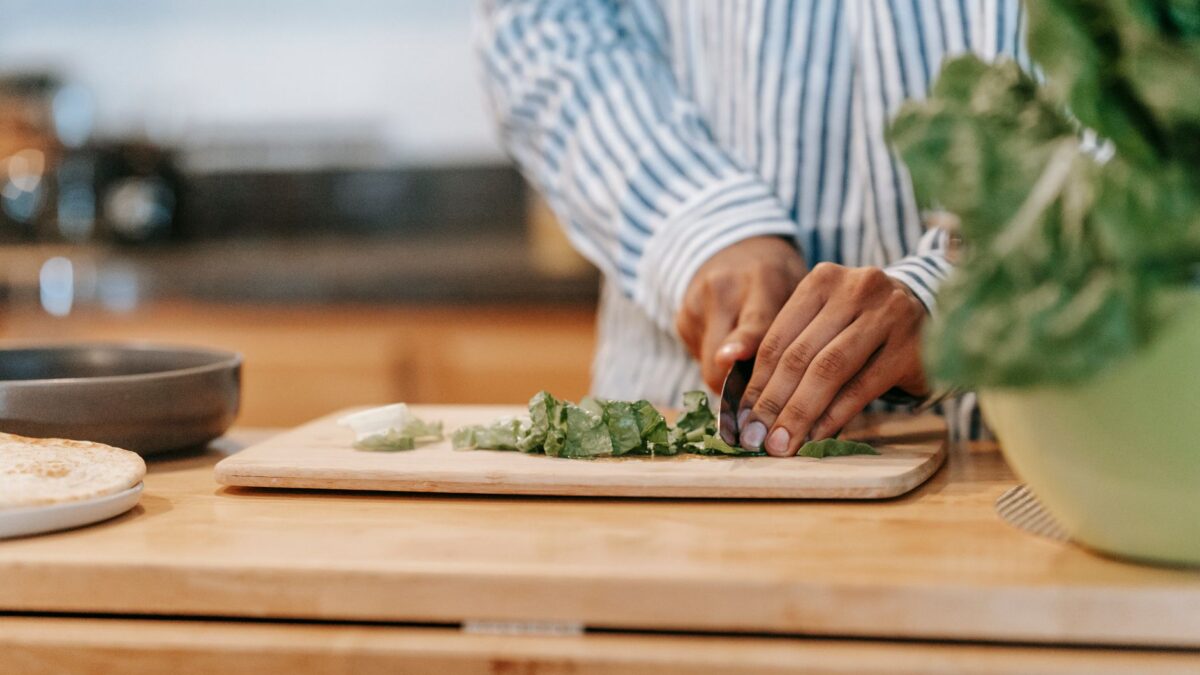
Wash any cutting board in hot, soapy water after each use, rinse, and let it dry fully. After cutting raw meat, poultry or seafood, you can also sanitize it with a solution the USDA’s Food Safety and Inspection Service (FSIS) suggests: 1 tablespoon of unscented liquid chlorine bleach per gallon of water, left on for several minutes, then rinsed and air- or pat-dried. Use separate boards for raw meat and ready-to-eat foods, and replace boards with deep, hard-to-clean grooves.
The board material changes some details, like whether it can go in the dishwasher, but the food-safety basics are the same.
What you need
- Hot water and dish soap
- A scrub brush
- Unscented liquid chlorine bleach (for sanitizing)
- A clean towel or a rack for drying
- Coarse salt, baking soda and a lemon (for stains and smells)
- Food-grade mineral oil or board cream (wood boards only)
Wood vs plastic
| Wood or bamboo | Plastic | |
|---|---|---|
| Daily wash | Hot soapy water by hand, quick rinse | Hot soapy water, or the dishwasher if labeled dishwasher-safe |
| Dishwasher | No; heat and water can crack or warp it | Often yes; check the label |
| Soaking | No | Short soaks are fine |
| Upkeep | Oil with food-grade mineral oil when it looks dry | None, but grooves build up over time |
| Replace when | Deep cracks or grooves you can’t clean | Excessively worn or deeply scored |
FSIS says both wood and nonporous boards such as plastic, marble or glass are acceptable, and that nonporous surfaces are easier to clean. It also recommends one board for fresh produce and bread and a separate one for raw meat, poultry and seafood.
After raw chicken or meat
- Scrape off any residue into the trash.
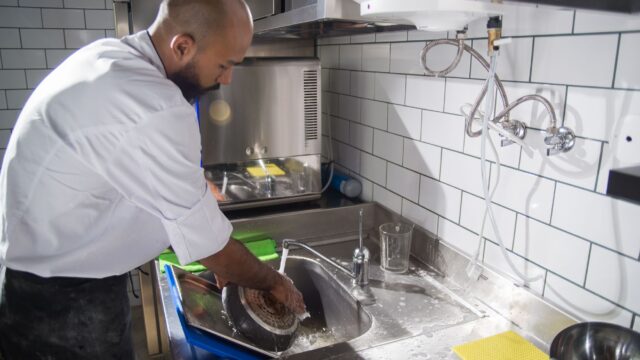
- Wash the board with hot water, dish soap and a brush, working into knife marks. Don’t just rinse.
- Rinse with clean water.
- Sanitize (optional but useful). Mix 1 tablespoon of unscented liquid chlorine bleach into 1 gallon of water. Flood the board’s surface and leave it for several minutes.
- Rinse with clean water and air-dry or pat dry with a clean paper towel.
- Clean around it. Wash knives, the sink and the counter, and wash your hands with soap for 20 seconds.
Plastic boards labeled dishwasher-safe can go through a hot cycle instead of the bleach step. Mix the bleach solution fresh, use only water and bleach, and never add vinegar, ammonia or other cleaners to it. Ventilate, wear gloves if your skin is sensitive, and keep the bleach in its original container away from children. Details are on the FSIS cutting boards page.
If you prefer a commercial sanitizer or disinfectant, use one labeled for food-contact surfaces and follow its directions, including the contact time and any rinse step. Homemade mixes such as vinegar are cleaners, not registered sanitizers.
Stains and smells
Stains (beets, berries, turmeric)
Sprinkle coarse salt or baking soda over the stain, rub with half a lemon, wait a few minutes, then wash and rinse. On plastic, a paste of baking soda and water left for 10 minutes works too. Some colored stains on plastic are permanent but harmless.
Garlic, onion and fish smells
Rub with lemon and salt, or a baking soda paste, then wash. Drying the board fully in open air also helps. Lingering smells in a wooden board after cleaning can mean moisture is trapped in deep cracks.
Mold spots on wood
Small surface spots often come from storing a board wet. Scrub with hot soapy water, dry completely, and store upright. If mold is inside cracks, replace the board.
Caring for wooden boards
- Wash and dry right away. Don’t leave wood sitting in water.
- Dry upright so air reaches both sides; this prevents warping.
- Oil when it looks pale or dry, often monthly with regular use. Rub in food-grade mineral oil, let it soak in for a few hours or overnight, then wipe off the excess.
- Avoid cooking oils like olive or vegetable oil for conditioning; they can turn rancid.
- Sand out light knife marks with fine sandpaper, then re-oil.
When to replace a board
FSIS advises replacing boards, including plastic ones, once they are excessively worn or develop hard-to-clean grooves. Deep scoring traps food and moisture where scrubbing can’t reach. Cracked or warped wooden boards should go as well.
Kitchen hygiene beyond the board
Sponges and dishcloths spread germs back onto clean boards. Replace or launder them often, and keep counters clean with a regular routine; our weekly cleaning schedule can help. Produce scraps left on boards also attract pests, see how to get rid of fruit flies.
If someone swallows, inhales or gets a cleaning product in the eyes, call Poison Control at 1-800-222-1222 (US) or emergency services.
Bottom line
Hot soapy water after every use is the core habit. After raw meat, sanitize with 1 tablespoon of unscented bleach per gallon of water, as FSIS suggests, then rinse. Keep separate boards for raw meat, keep wood dry and oiled, and replace any board you can no longer clean properly.
FAQ
Is wood or plastic more hygienic?
FSIS says both are acceptable. Nonporous plastic is easier to clean and can often go in the dishwasher; wood needs hand-washing and oiling. Clean either one properly and replace it when worn.
Can I use vinegar to sanitize a cutting board?
Vinegar helps with odors and light cleaning, but it is not a registered sanitizer. For sanitizing, use the diluted bleach solution or a product labeled for food-contact surfaces.
Will bleach damage a wooden board?
The weak FSIS-recommended dilution, rinsed off afterward, is used on wood. Stronger solutions can dry or damage it, so stick to the dilution.
How often should I oil a wooden cutting board?
Whenever it looks dry or pale, often about once a month with regular use. New boards may need it more often at first.