Wasp Nest Removal: When DIY Is Safe and When to Call a Pro
Small, exposed wasp nests can be treated at dusk with a labeled wasp spray. Nests in walls, the ground or high up, and any sting allergy, need a pro.
Wasp nest removal is a reasonable DIY job only when the nest is small (roughly golf-ball to softball size), hangs in the open, sits within reach from the ground, and nobody in the household is allergic to stings. Nests inside walls, attics, vents or the ground, nests above head height, large paper nests of hornets or yellowjackets, and any household with a sting allergy should go to a licensed pest control professional. Treat at dusk or after dark, when the wasps are back in the nest and slow, using a wasp and hornet spray applied exactly as the label directs.
Which wasp nests are safe to remove yourself?
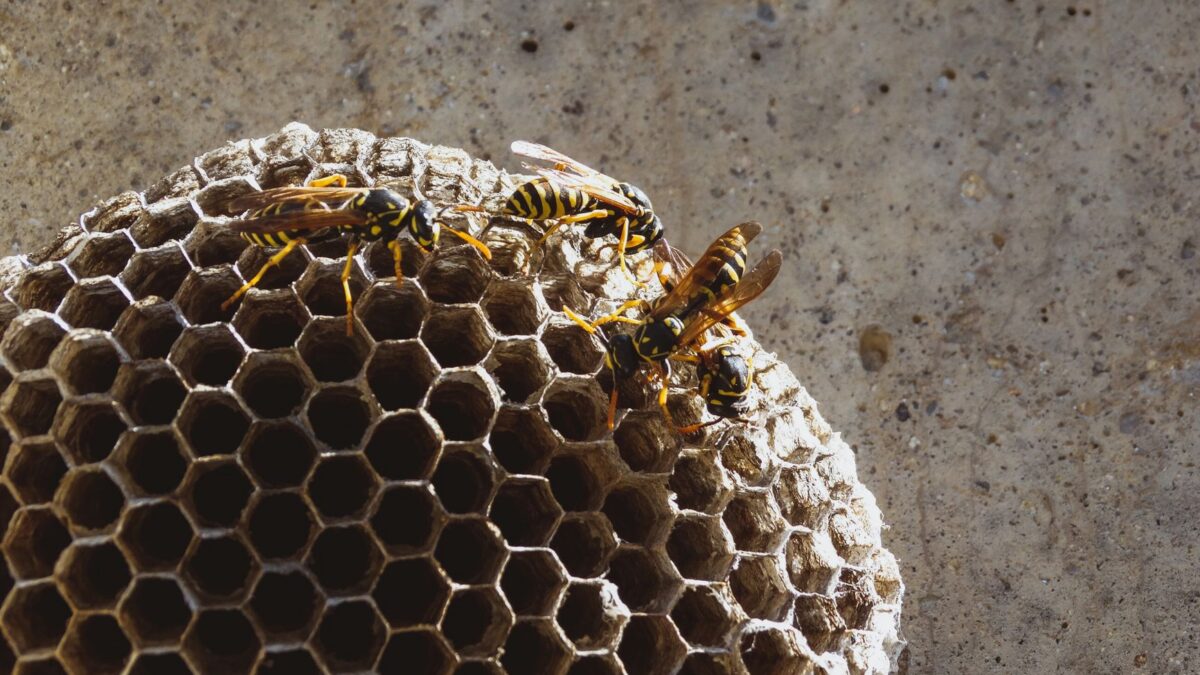
An open, small paper wasp nest under an eave, porch rail, mailbox or deck board is the safest kind to handle yourself. Paper wasps build umbrella-shaped combs with the cells visible from below, and the colony stays smaller than most other species. A nest like this early in the season may hold only a queen and a handful of workers.
- The nest is fully visible, with no part hidden behind siding or inside a gap.
- You can reach it standing on the ground or a stable step, without a tall ladder.
- There is a clear escape path behind you.
- Children and pets can be kept indoors while you work.
Finding nests in late spring, when they are still small, makes the job much easier than waiting until late summer, when colonies reach their peak size and wasps defend them hard.
When should you call a professional?
Call a pest control company whenever the nest is hidden, large, high, or near people who cannot get away from it. These situations carry a real risk of many stings at once or of driving wasps into the house.
- Anyone in the home has had a serious reaction to a sting.
- The nest is in a wall void, attic, chimney, soffit, or a dryer vent or exhaust duct.
- Wasps are flying in and out of a hole in the ground (usually yellowjackets).
- The nest is a large, enclosed gray paper ball, typical of hornets and aerial yellowjackets.
- Reaching it would mean working from a ladder or a roof.
- You have already sprayed once and the colony is still active.
Professionals carry protective suits and dusts that wasps carry deep into a hidden nest, and many will remove the dead nest afterward.
How do you remove a small wasp nest safely?
Use a spray labeled for wasps and hornets, and read the whole label before you start, because the label is the legal instruction for that product.
- Plan for dusk or night. Most of the colony is inside and less active in cool, dim conditions.
- Wear long sleeves, long pants tucked into socks, gloves, closed shoes and eye protection. A hood or hat helps.
- Use a red-filtered flashlight or set a light off to one side. Wasps fly toward a bright white light in your hand.
- Stand upwind and as far back as the label allows, then spray the nest opening and comb for the full time the label states.
- Walk away at once and stay away until the next day.
- Check for activity the following evening. Spray again only if the label permits a repeat treatment.
- Once there is no movement for a day or two, knock the nest down with a long pole and bag it for the trash.
Store leftover spray locked and out of reach of children and pets; a garage set up with a high, closed chemical shelf works well for this. If spray gets on skin or in eyes, or someone swallows it, call Poison Control at 1-800-222-1222 in the US.
What should you never do to a wasp nest?
Avoid any method that angers the colony without killing it, or that adds fire, flooding or blocked exits to the problem.
- Do not seal the entrance of a nest in a wall. Trapped wasps often chew through drywall and come out inside the home.
- Do not burn a nest or pour gasoline or other fuel on it. This starts fires and causes burns.
- Do not knock down or hit an active nest with a stick, hose or ball.
- Do not mix pesticides or household chemicals to make a stronger spray.
- Do not use a ladder to reach a live nest. A sting while you are on a ladder can cause a fall.
- Do not spray from directly underneath, where falling wasps and spray land on you.
Is it a wasp nest or a honey bee swarm?
Honey bees are fuzzy, golden-brown and build wax comb, while most wasps are smooth and shiny and build gray paper nests. The difference matters because honey bees are pollinators and many local beekeepers or beekeeping clubs will collect a swarm or a colony. A cluster of bees hanging on a branch is usually a swarm resting for a short time and often leaves on its own. Bumble bees nesting in the ground are also best left alone or handled by a specialist rather than sprayed.
What to do if you get stung
Most stings cause pain, redness and swelling at the site that fade within a day or two. Move away from the nest first, because alarmed wasps can sting again and call others. Wash the area with soap and water, apply a cold pack, and use an over-the-counter antihistamine or pain reliever if needed, following the package directions.
Call 911 at once for trouble breathing, swelling of the face, lips or throat, dizziness, hives spreading over the body, or many stings at once. Anyone with a known allergy should use their prescribed epinephrine auto-injector and still get emergency care. The CDC’s National Institute for Occupational Safety and Health covers insect sting safety for people who work outdoors.
How can you keep wasps from nesting again?
Wasps return to the same sheltered spots each year, so prevention focuses on those spots and on food.
- Walk around the house every week or two in spring and knock down new, golf-ball-size nests while the queen is alone. Do this only at nests you can reach safely.
- Seal gaps in siding, soffits and around pipes in fall or winter, when nests are empty.
- Fit fine screens over vents and keep vent flaps working.
- Keep trash cans closed and rinse sticky recycling.
- Clean up fallen fruit and cover food and sweet drinks outdoors in late summer.
If one problem keeps coming back despite these steps, a professional inspection is worth it, much as with bed bugs that survive home treatment. The EPA’s safe pest control guidance explains how to choose and use pesticides at home.
Quick answers
Do wasps reuse an old nest?
No. In cold-winter climates the colony dies off in late fall and only new queens survive, sheltering elsewhere. An empty old nest can be removed in winter, though a new nest may be built nearby.
What is the best time of day to spray a wasp nest?
Dusk or after dark. Nearly all the wasps are inside the nest, and cool temperatures make them slower to fly.
Can I use soapy water instead of wasp spray?
Soapy water can kill wasps it soaks, but it rarely reaches the whole colony and usually provokes the rest. A product labeled for wasps, used as directed, is safer for a nest you choose to treat yourself.
How much does professional wasp removal cost?
Prices vary by region, nest location and access. Ask for a quote that says whether nest removal and a follow-up visit are included.