Carpenter Ants: Signs of Damage and How to Get Rid of Them
Carpenter ants hollow out damp wood to nest. Spot the signs, from sawdust piles to winged ants, then find the nest, bait it and fix the moisture behind it.
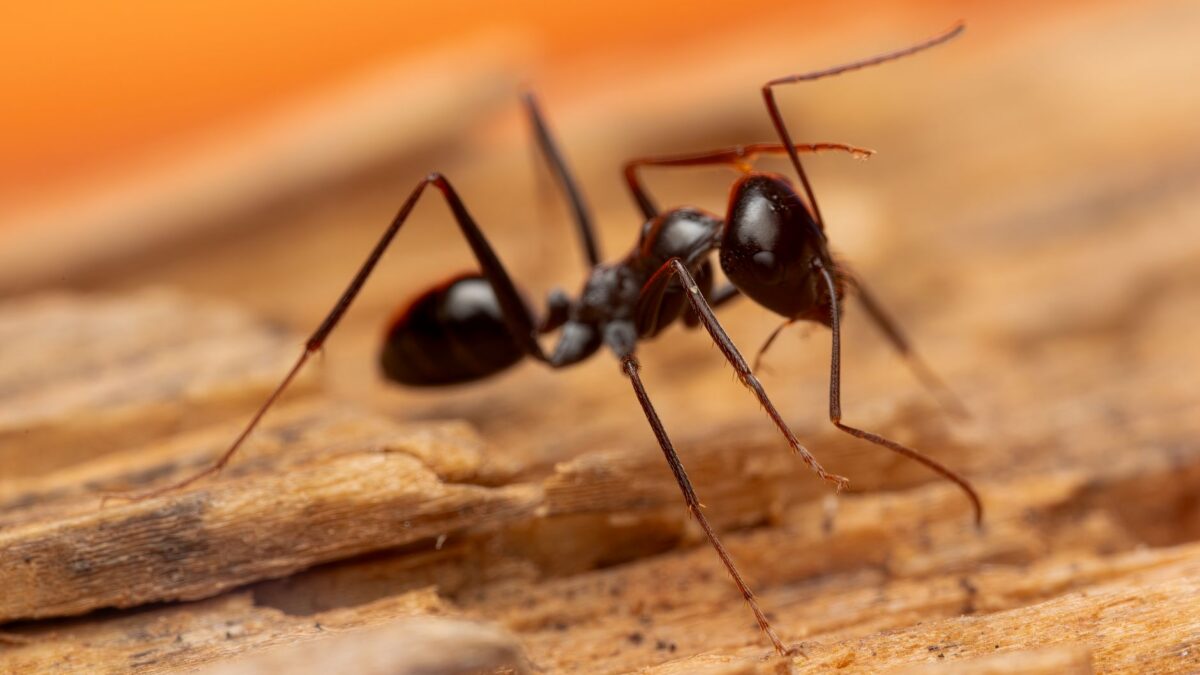
Carpenter ants are large ants, usually black or red and black, that hollow out wood to build nests. They do not eat wood the way termites do, but a colony left for years can weaken window frames, sills, decks and wall framing. The clearest signs are small piles of coarse sawdust (called frass), large ants indoors at night, and winged ants inside in spring. Getting rid of them means finding the nest, treating it with bait or a labeled insecticide, and fixing the moisture that drew them in.
How do I know if I have carpenter ants?
Carpenter ants are among the biggest ants found in homes, with workers roughly 1/4 to 1/2 inch (6 to 13 mm) long and workers of different sizes in the same colony. Look for these signs:
- Frass: small piles of coarse, sawdust-like shavings below baseboards, window frames, door frames or attic beams. Frass often contains bits of dead insects and soil.
- Large ants indoors, especially at night, when workers are most active. A few ants seen in a kitchen in late winter or early spring suggest a nest inside the house, since outdoor colonies are still inactive then.
- Winged ants (swarmers) coming from walls, ceilings or window frames in spring.
- A faint rustling or crackling sound inside a wall or hollow door.
- Wood that sounds hollow when tapped, or small slit-like openings in wood surfaces.
Carpenter ant galleries inside wood are smooth and clean, almost sanded. Termite galleries look rough and are packed with mud or soil.
Is it carpenter ants or termites?
Winged carpenter ants and winged termites both appear in spring, and a few body features tell them apart:
- Waist: ants have a narrow, pinched waist; termites have a thick waist with no pinch.
- Antennae: ants have bent, elbowed antennae; termite antennae are straight and bead-like.
- Wings: ant front wings are longer than the hind wings; termite wings are all about the same length and often break off in piles.
- Debris: carpenter ants push out frass; subterranean termites leave mud tubes on foundations and walls.
If you find any of the termite signs, call a licensed pest control company, because termite treatment is a different job.
Where do carpenter ants nest?
Carpenter ants prefer wood that is damp, soft or already decaying. A colony often has a main (parent) nest outdoors, in a tree stump, dead tree limb, firewood pile or landscape timber, plus one or more satellite nests inside the house. Common indoor spots include:
- Wood around leaking windows, doors and skylights
- Framing under bathtubs, showers, dishwashers and sinks
- Roof eaves, attic areas and wall voids where a roof or gutter leaks
- Porch and deck framing that stays wet
- Hollow doors and foam insulation, which they can also tunnel into
A wet spot in the house is often the real problem. Stains, sagging or peeling paint on a ceiling can point to a leak, and our guide to water damage on a ceiling explains what to look for.
How do I find a carpenter ant nest?
Follow the ants. Workers travel along regular trails between the nest and food, and they move most after dark.
- Check after sunset with a flashlight, ideally one with a red filter, which bothers ants less.
- Put out a little bait, such as a dab of honey or jelly on a card, where you have seen ants, and watch where they carry it.
- Follow the trail to a crack, gap or hole in wood, trim, an outlet or a wall.
- Look for frass under that spot and tap the wood to find hollow areas.
- Outdoors, check stumps, firewood, dead branches and tree limbs touching the roof.
How do I get rid of carpenter ants?
Treating the nest works far better than spraying the ants you see. Spraying foragers kills a few workers and leaves the queen and colony in place.
- Bait: ant baits labeled for carpenter ants work slowly, so workers carry the poison back to the nest. Place bait along trails and leave it undisturbed for several days to a few weeks. Carpenter ants switch between sweet and protein foods, so if they ignore one bait, try another type. The same follow-the-trail approach is behind our guide to getting rid of ants in the kitchen.
- Dust: when you know where the nest is, an insecticidal dust labeled for carpenter ants (boric acid is one common type) can be puffed into the galleries through existing openings or small drilled holes.
- Outdoor nests: remove infested stumps, logs and firewood, or treat them with a product labeled for that use.
Read and follow every product label, wear gloves, and keep baits and dusts where children and pets cannot reach them. Do not mix pesticides with each other or with cleaners. The EPA has guidance on choosing and using household pesticides safely. If someone swallows a product, call Poison Control at 1-800-222-1222 in the US.
When should I call a pest control professional?
Call a licensed professional if you cannot find the nest, if ants keep returning after treatment, if the nest is inside a wall or ceiling you cannot reach, or if wood looks soft or damaged. A professional can locate hidden satellite nests and treat wall voids. Badly damaged framing, sills or deck supports need a carpenter or contractor to judge whether they must be replaced.
How do I keep carpenter ants from coming back?
Dry wood and fewer entry points keep most colonies away. Useful steps:
- Fix roof, gutter, plumbing and window leaks, and replace wood that has rotted.
- Trim tree branches and shrubs so they do not touch the roof or siding.
- Store firewood off the ground and well away from the house, and bring in only what you will burn soon.
- Keep mulch and soil from touching wood siding.
- Seal gaps around pipes, wires, doors and windows. The sealing advice in our guide to keeping rats out applies to ants as well.
- Ventilate attics and crawl spaces so wood stays dry.
The University of Minnesota Extension has photos of carpenter ants and their damage.
Quick answers
Do carpenter ants bite?
Carpenter ants can bite when handled, and the bite may sting a little because they spray formic acid. They do not sting the way fire ants do, and they are not considered a health risk.
How fast do carpenter ants damage a house?
Damage builds slowly, over years, and is usually limited to wood that was already wet. A large or long-established colony can still weaken framing, so treat an infestation as soon as you find it.
Does seeing one carpenter ant mean an infestation?
One ant in summer may have wandered in from outdoors. Repeated sightings, ants indoors in late winter, winged ants or frass point to a nest inside.