Car Smells Like Gas: Common Causes, When It Is Dangerous and What to Do
A gas smell in your car can be minor or a fire risk. Learn the common causes, the signs that mean stop driving now, and what to do right away.
A faint gas smell right after you fill up is often harmless, but a strong or lasting smell of raw fuel is not something to ignore. Liquid fuel and fuel vapor can ignite, so the safe rule is simple: if the smell is strong, you can see or hear fuel leaking, or the smell appears together with smoke, a hot engine or a warning light, stop, switch off the engine and get away from the car. For a mild smell, the cause is often a loose gas cap or a small spill, and you can check those yourself.
When a gas smell is an emergency
Treat the situation as dangerous and do not keep driving if any of these apply:
- The smell is strong inside the cabin, or you feel dizzy, get a headache or feel sick.
- You see fuel dripping or pooling under the car, or a wet patch on the ground that smells of gasoline.
- There is smoke, a burning smell or visible fuel near the engine.
- The check engine light is flashing, or the engine is running roughly or stalling.
- The smell came on right after an accident or after you hit something on the road.
In these cases pull over somewhere safe, turn off the engine, do not smoke or use a lighter, and keep everyone well away from the car. If you see fuel running out or smell it strongly, call emergency services. Do not restart the engine to see whether it goes away. Arrange a tow to a repair shop instead of driving.
What to do right away for a milder smell
- Park outdoors and turn the engine off. Do not leave the car running in a closed garage, because fuel vapor and exhaust gases build up quickly.
- Open the windows and doors to ventilate the cabin.
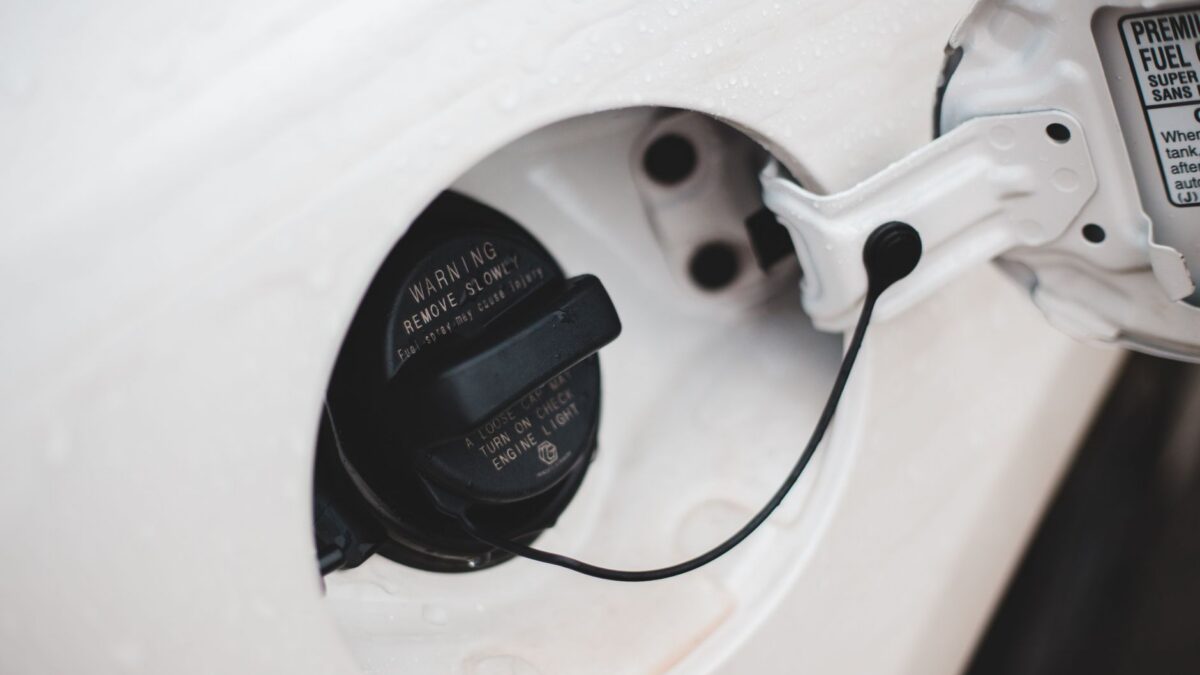
- Check the gas cap. It should be on and tightened until it clicks. A missing, cracked or loose cap is one of the most common causes.
- Look under the car for drips or wet spots, especially near the rear (tank and lines) and the front (engine).
- Check what is in the car. A can of fuel, a lawn mower or a gas-soaked rag in the trunk can make the whole car smell like gas.
- Note when it happens: only after fueling, only when the engine is cold, only when the engine is hot, or all the time. This helps a mechanic find the cause faster.
Common causes of a gas smell
Loose, damaged or wrong gas cap
The cap seals the fuel system. If it is loose, cracked or has a worn seal, vapor can escape and the check engine light may come on. Tighten it until it clicks. If the seal looks cracked, replace it with the correct cap for your vehicle.
Fuel spilled when filling up
Fuel splashed on the bumper, the fuel door or the ground near the car can smell for hours, especially in warm weather. Wipe the area with a cloth and let the car air out. Do not top off after the pump clicks off, since extra fuel can overfill the vapor-recovery parts of the system.
Evaporative emissions (EVAP) system problems
Modern cars capture fuel vapor in a charcoal canister and burn it later in the engine. Cracked hoses, a faulty purge valve or a damaged canister can let vapor out, giving a gas smell near the rear or engine bay and often a check engine light. This is not an emergency by itself, but it needs repair.
Leaking fuel line, fuel filter or tank
Rubber and metal fuel lines age, rust and crack. A leaking line, filter connection or tank produces a strong, persistent smell, sometimes with drips under the car. This is a fire risk and calls for a tow and professional repair.
Leaking fuel injectors or injector seals
Worn seals or a cracked injector can leak fuel onto a hot engine. You may notice the smell mainly when the engine is running or just after you shut it off, sometimes with rough running or poor fuel economy. Have it inspected promptly.
Engine running too rich or exhaust smell
If the engine burns too much fuel, unburned gasoline can come out of the tailpipe, which smells sharp and may come with black smoke, poor mileage or a failed emissions test. A faulty sensor, a stuck injector or an engine in need of a tune-up are possible causes. A mechanic can read the codes and check.
Old or damaged parts after recent work
If the smell started after a repair or service, a hose or clamp may not have been reconnected properly. Contact the shop that did the work and ask them to recheck it.
Gas smell inside versus outside the car
- Smell mostly outside, near the fuel door or rear: look at the gas cap, a recent spill or the EVAP system.
- Smell mostly under the hood: a leaking injector, fuel line or filter is more likely. Do not open the hood near a hot engine if you can see fuel or smoke.
- Smell inside the cabin: fuel vapor can be drawn in through the ventilation system, or fuel may be leaking under the car. Treat a strong cabin smell seriously and ventilate.
- Smell only at startup: a cold engine uses extra fuel, but a strong or lasting smell still deserves a check.
What to do about the smell after the cause is fixed
Once a mechanic has repaired the leak, any leftover odor in the cabin can be treated like other car odors. Fuel can soak into carpet and trunk lining, so remove what caused it, air the car out with the doors open outdoors, and follow the steps in how to get a smell out of a car. Never use heat or open flames to dry fuel-soaked material, and never bring fuel-soaked items indoors.
If you are tempted to look around the engine yourself, read how to clean a car engine bay safely first, and leave the engine bay alone when fuel is present. A leak is a repair job, not a cleaning job.
Prevention
- Tighten the gas cap until it clicks after every fill-up.
- Stop fueling when the pump shuts off automatically.
- Do not carry fuel containers inside the passenger area, and use only approved containers in the trunk, secured upright.
- Have fuel lines, hoses and the tank area checked during regular service, especially on older cars or those with rust.
- Do not ignore the check engine light. Many EVAP and fuel problems show up there first.
Quick answers
Is it safe to drive if my car smells like gas?
If the smell is faint and goes away after you tighten the gas cap or wipe up a spill, driving is usually fine. If it is strong, lasts or comes with leaks, smoke or warning lights, do not drive. Have the car towed.
Why does my car smell like gas after filling up?
Spilled fuel, an overfilled tank or a loose gas cap are the usual reasons. The smell should fade within a day. If it does not, have the EVAP system checked.
Can a gas smell make me sick?
Yes. Breathing fuel vapor can cause headaches, dizziness and nausea. Ventilate the car, get fresh air and seek medical help if symptoms persist. In the US, Poison Control is at 1-800-222-1222.
Will the check engine light come on for a gas smell?
Often, when the cause is a loose cap or an EVAP leak, but not always. A leaking fuel line may not trigger any light, so trust your nose and look for drips.