How to Clean a Grill: Grates, Burners, Grease Trap and a Yearly Deep Clean
A quick routine after every cook, a proper deep clean once or twice a season, and why you should check your grates for loose wire bristles before the food goes on.
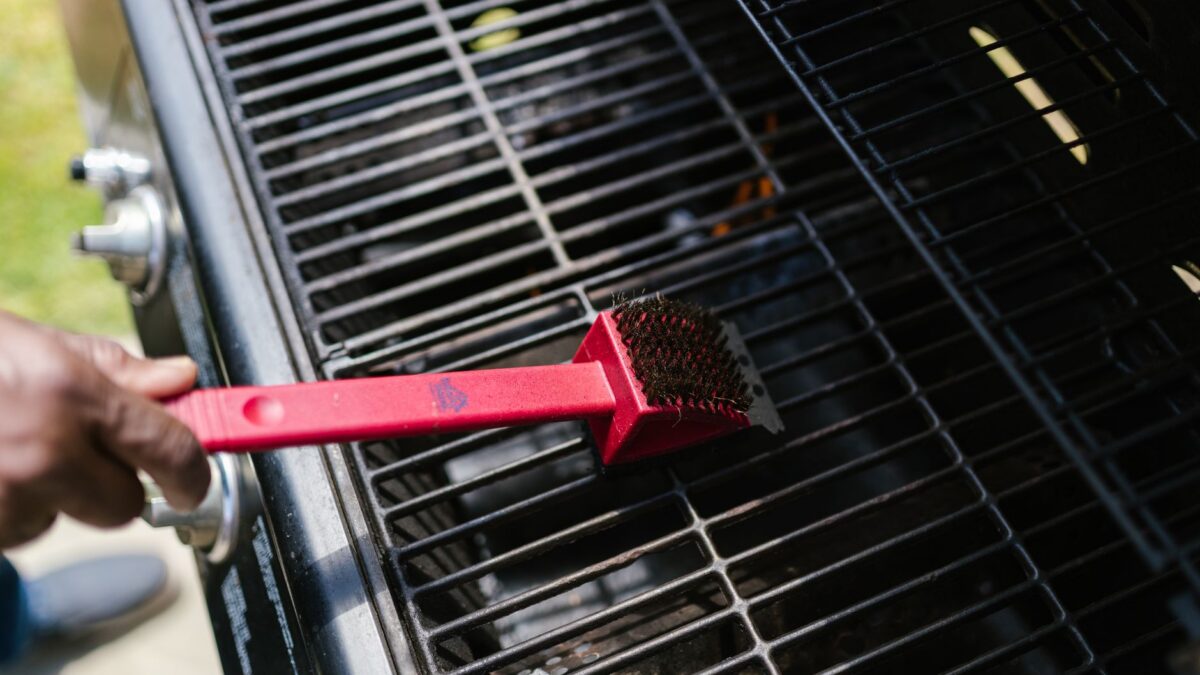
The easiest way to keep a grill clean is a 10-to-15-minute burn-off on high after cooking, followed by a scrape of the warm grates. Once or twice a season, do a deep clean: soak the cool grates in hot water and dish soap, scrape the grease off the inside of the firebox and empty the grease trap. If you use a wire brush, check the grates afterward: loose bristles can end up in food and have caused serious throat and stomach injuries.
How often to clean a grill
| Task | Gas grill | Charcoal grill |
|---|---|---|
| Burn-off and scrape grates | After every cook | After every cook, while the coals are still hot |
| Empty grease tray or cup | Check every few cooks; empty before it is half full | Not applicable (fat drips into the ash) |
| Empty ash | Not applicable | Once ash is completely cold, before the next cook |
| Deep clean grates, firebox, lid | Start and end of the season, more often with heavy use | Same |
| Check burners and gas hose | Start of the season and after storage | Not applicable |
What you need
- A grill brush or scraper suited to your grates (see the bristle section below)
- Dish soap and a bucket or tub of hot water
- A plastic or wooden scraper and a non-scratch scrub pad
- Baking soda for stubborn spots on grates
- Rubber gloves, paper towels and old rags
- A small metal bucket for ash (charcoal grills)
- Your grill’s owner’s manual, if you still have it (most makers post them online)
The quick clean after every cook
- Burn off. On a gas grill, close the lid and run all burners on high for about 10 to 15 minutes after cooking (or before the next cook). Residue turns to ash that brushes off easily.
- Scrape while warm. Use a long-handled brush or scraper, working along the bars. Warm grease lifts far more easily than cold grease.
- Wipe the bars. Fold a paper towel, dip it lightly in cooking oil and wipe the grates with tongs.
- Shut down properly. Turn the burners off, then close the valve on the propane tank. On a charcoal grill, close the vents to starve the coals of air.
Wire brushes and loose bristles
Wire grill brushes work, but they wear out. The CDC published a report in 2012 on six patients treated at one Rhode Island hospital system after swallowing wire bristles that had come off grill-cleaning brushes and stuck to grilled food; some needed surgery. The report advised checking grill surfaces for stray bristles before cooking. You can read it in the CDC’s MMWR.
Practical steps:
- Inspect the brush before each use and replace it as soon as bristles look loose, bent or sparse.
- Wipe the grates with an oiled paper towel or damp cloth after brushing to catch strays, and look before you add food.
- Consider alternatives: bristle-free coil brushes, a flat stainless or wooden scraper, or a grill stone. Check your manual first, because some scrapers and stones can scratch porcelain-coated grates.
If someone feels a sharp pain when swallowing after a cookout, they should see a doctor promptly.
Deep clean a gas grill
Do this with the grill cold. Turn every burner knob off, close the propane tank valve and disconnect the regulator from the tank (or shut off the natural gas supply as your manual describes).
- Remove the grates and flame tamers. Flame tamers (also called flavorizer bars, heat tents or heat plates) sit over the burners and collect most of the drippings.
- Soak the grates. Put them in a tub or large bucket of hot water with a good squeeze of dish soap for 30 minutes to an hour. Scrub with a non-scratch pad. For stuck-on spots, rub on a paste of baking soda and a little water, then rinse.
- Scrape the flame tamers with a plastic scraper, then wash them the same way.
- Brush the burners gently. Use a soft brush across, not along, the burner ports so you do not push debris into them. Do not use water on the burners unless your manual says to. Many manuals warn that insects such as spiders can nest in the burner tubes over winter, which can cause uneven flames or a fire under the control panel; follow your maker’s instructions for clearing them.
- Scrape the firebox. Push the grease and debris from the inside walls and bottom down toward the grease opening with a plastic scraper.
- Empty and clean the grease tray. Scrape the solid grease into the trash (not the drain), wipe the tray and replace any disposable liner. A full grease tray is a common cause of grease fires.
- Clean the lid. The flakes on the inside of the lid are usually carbonized grease and smoke, not peeling paint. Brush them off and wipe with soapy water.
- Reassemble and check for leaks. After reconnecting the tank, brush soapy water on the hose and connections with the gas valve open and the burners off. Bubbles mean a leak: shut the valve and do not light the grill until the part is tightened or replaced as your manual directs.
- Burn off. Light the grill and run it on high for 15 minutes to burn off any soap residue.
Deep clean a charcoal grill
- Make sure the ash is completely cold. Ash can hide live embers for a long time. Scoop it into a metal container with a lid, never a plastic bin or paper bag.
- Remove the cooking and charcoal grates and wash them in hot, soapy water as above.
- Scrape the bowl and lid with a plastic scraper, then wipe with soapy water and rinse.
- Clear the vents. Brush ash and grease out of the bottom vents so they open and close freely.
- Dry everything. Let the parts air-dry in the sun or wipe dry, then reassemble. Moisture left in the bowl encourages rust.
Grate materials: what is safe
| Grate type | Safe to use | Avoid |
|---|---|---|
| Stainless steel | Brushes and scrapers, soap and water, baking soda paste | Leaving it wet for days in a salty or coastal area without drying |
| Porcelain-enameled steel or cast iron | Soft brushes, plastic or wooden scrapers, soap and water | Metal scrapers, steel wool or heavy impacts that chip the coating |
| Bare cast iron | Scraping, brief hot-water wash, thorough drying, re-oiling | Long soaks and air-drying (both cause rust) |
Seasoning the grates
Seasoning simply means coating clean, dry grates with a thin layer of high-smoke-point cooking oil, then heating them so the oil bonds to the surface. It helps food release and slows rust, especially on cast iron. Wipe on a very thin coat with a paper towel (excess oil drips and flares), then run the grill on medium-high for 15 to 20 minutes. The same idea applies to a cast iron skillet.
Commercial grill cleaners and safety
Spray-on grill and oven cleaners can help with heavy, baked-on grease, but they are often strongly alkaline. Use only a product whose label says it is suitable for grills and for your grate and exterior material, and follow the label exactly, including wearing gloves and rinsing well. Never spray cleaners onto a hot grill unless the label says to, and never combine two different cleaners. Our guide to cleaning products that should never be mixed explains why.
For the outside of the grill, a cloth with warm, soapy water is enough for most finishes. Wipe stainless steel in the direction of the grain and dry it. Grease spatters on the patio or deck can be lifted with the same methods in our guide to removing grease stains.
Keep cleaning products in their original containers and away from children and pets.
If someone swallows, inhales or gets a cleaning product in the eyes, call Poison Control at 1-800-222-1222 (US) or emergency services.
Bottom line
Burn off and scrape after every cook, keep the grease tray from filling up and give the grill a proper soap-and-water deep clean at the start and end of the season. If you use a wire brush, replace it when it starts shedding and always look over the grates before cooking. Check the gas connections for leaks every time you reconnect a tank.
FAQ
Can I clean grill grates in the dishwasher?
Only if the manufacturer says so. Many grates are too big, and bare cast iron will rust. Stainless grates sometimes can go in, but a soak in hot, soapy water does the same job.
Is it better to clean the grill before or after cooking?
Either works for the burn-off, but scraping is easiest right after cooking while grease is soft. Many people burn off before cooking and scrape again just before the food goes on.
Do I need to clean a grill before storing it for winter?
Yes. Grease and food residue attract pests and hold moisture. Clean the grates and grease tray, dry everything, disconnect the propane tank and store the tank outdoors, upright, as your manual and local fire rules advise.