How to Clean a Roasting Pan After the Turkey (by Pan Material)
Burnt-on drippings look worse than they are. A soak, a baking soda paste and the right scrubber for your pan's material will handle most roasting pans.
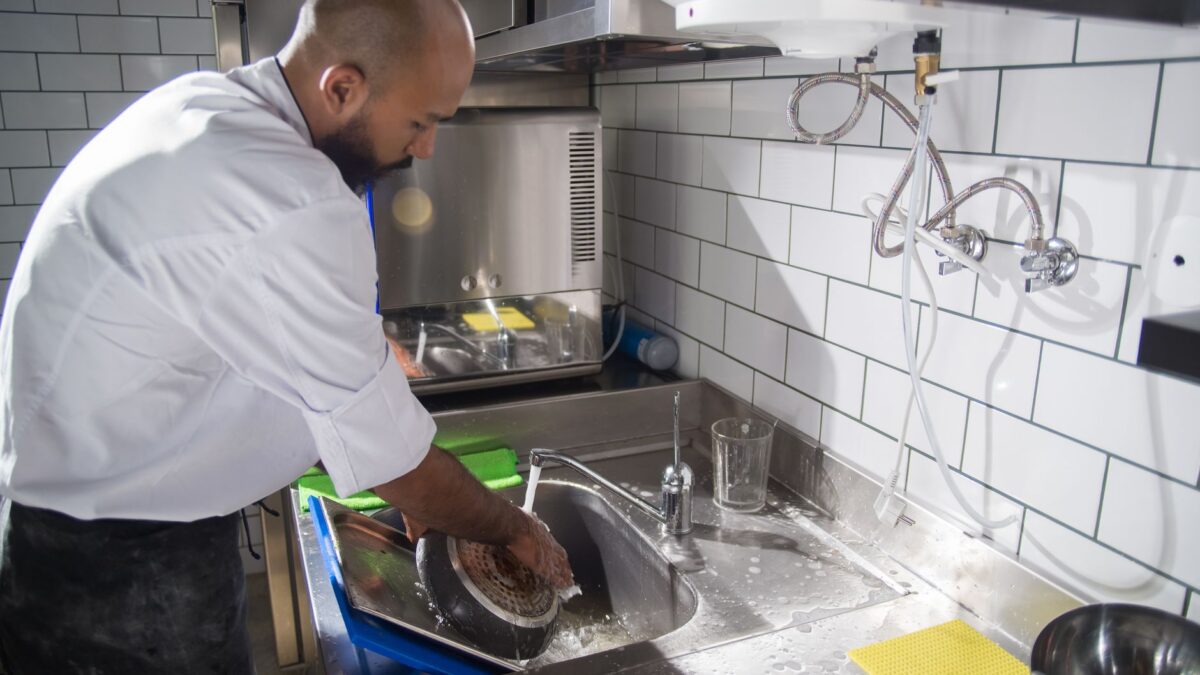
To clean a roasting pan, pour off cooled fat into a container for the trash, fill the pan with hot water and a squirt of dish soap, and let it soak for at least an hour or overnight. Then scrub with a baking soda paste and a scrubber that suits the material: a stiff nylon brush for stainless, a soft sponge for enamel and nonstick. Never pour turkey fat down the drain.
Most of what sticks to a roasting pan is caramelized sugar and protein from the drippings. Water and time soften it far better than force, so let the soak do the hard part.
What you need
- Dish soap and hot water
- Baking soda
- A plastic or wooden scraper (or a silicone spatula)
- Non-scratch sponge; a stiff nylon brush for stainless steel
- An empty can or jar for cooled grease
- Rubber gloves, if the water is hot or your skin is sensitive
Step 1: Get rid of the grease safely
Let the pan cool until it is warm, not hot. Pour drippings you aren’t using for gravy into a heat-safe can or jar, let them harden (the fridge or freezer speeds this up), and put the container in the trash. Wipe the remaining film out of the pan with a paper towel.
Do not rinse grease down the sink or garbage disposal. City water utilities consistently warn that fats, oils and grease harden in pipes and sewers even when you follow them with hot water and soap. Some areas collect cooking oil for recycling, so check your local program if you deep-fried a turkey and have a lot of oil.
Step 2: Soak
- Scrape out loose bits with a plastic scraper.
- Fill the pan with the hottest tap water you can safely handle and add a good squirt of dish soap.
- Let it sit at least an hour. For heavy, blackened drippings, leave it overnight.
- Pour out the water and wipe away whatever lifts easily.
Step 3: Baking soda for what’s left
- Sprinkle baking soda over the stuck-on areas and add a little water to make a thick paste.
- Leave it for 15–30 minutes.
- Scrub with a sponge or nylon brush, working in small circles.
- Rinse and repeat on stubborn spots.
For a pan that is still crusted, a stovetop simmer helps if the pan is stovetop-safe (check the maker’s instructions; many roasting pans are, some are not). Add an inch of water and a couple of tablespoons of baking soda, bring it to a gentle simmer for 10–15 minutes, let it cool, then scrape and scrub. Never leave it unattended, and don’t let the water boil dry.
By pan material
| Material | What works | Avoid |
|---|---|---|
| Stainless steel | Soak, baking soda paste, stiff nylon brush; an oxalic-acid cleanser powder for discoloration, used per its label | Steel wool on polished finishes; chlorine bleach (can pit and stain stainless) |
| Enamel-coated (enamelware or enameled cast iron) | Long soak, baking soda paste, soft sponge; simmer only if the maker allows | Metal scrapers, harsh abrasive powders, sudden temperature shocks (hot pan into cold water) |
| Nonstick | Soak and soft sponge; baking soda paste with gentle pressure | Abrasive pads, metal utensils, oven cleaner |
| Aluminum (uncoated) | Soak, gentle scrub with dish soap | Dishwashers (can dull and darken many aluminum pans), strong alkaline cleaners |
| Disposable foil | A quick soak and wipe if you want to recycle it | Heavy scrubbing; the pan isn’t built to last |
Stainless steel
Stainless can take a stiff nylon brush and a fair amount of elbow grease. Rainbow-colored heat tint and brown stains respond to a cleanser that contains oxalic acid (sold as a powder or soft cleanser). Wear gloves, keep the area ventilated, follow the label, rinse thoroughly, and never use it along with bleach. For more on badly scorched cookware, see how to clean a burnt pan.
Enamel and enameled cast iron
Enamel is glass fused to metal. It handles soaking well but can chip and scratch. Use soft tools and patience. Let the pan cool before adding water, because a sudden temperature change can crack enamel. Many makers of enameled cookware publish care pages that list the cleaners they approve; check yours.
Nonstick
Nonstick roasting pans usually clean up with a soak and a soft sponge. Anything abrasive shortens the coating’s life. If the coating is badly scratched or flaking, it is time to replace the pan.
Disposable foil pans
Foil pans are designed for one or two uses. If your local program accepts clean aluminum foil for recycling, rinse off the food and grease first; otherwise, put it in the trash. Always support a foil pan full of turkey with a baking sheet underneath; it can buckle when you lift it.
What about the dishwasher?
Check the manufacturer’s care instructions. Many stainless roasting pans are dishwasher-safe, though large ones may block the spray arms. Uncoated aluminum, many nonstick pans and some enameled pieces are hand-wash only. Even when a pan is dishwasher-safe, a pre-soak gives much better results than relying on the cycle alone.
Don’t forget the rack
Roasting racks collect drippings in every joint. Soak the rack in the same hot, soapy water as the pan, then scrub with a bottle brush or old toothbrush. A baking soda paste helps with the corners.
If you are cleaning up after a big holiday meal, our Thanksgiving cleaning checklist sets out an after-dinner order that keeps the pan soaking while you deal with leftovers and dishes.
Bottom line
Pour cooled grease into a container for the trash, soak the pan in hot soapy water, then use baking soda and a scrubber that suits the material. Skip steel wool on nice finishes and keep bleach away from stainless steel. Time does most of the work.
FAQ
Can I use oven cleaner on a roasting pan?
Only if both the oven cleaner label and the pan maker allow it. Oven cleaners are typically strong alkalis that can damage aluminum, nonstick coatings and some finishes. Try a soak and baking soda first.
Are dryer sheets good for soaking pans?
Some people soak pans with a dryer sheet, but the soaking water is doing most of the work. Dish soap is made for food residue and is the simpler choice.
How do I get rid of brown stains on a stainless roasting pan?
Try a baking soda paste first. For stubborn discoloration, a cleanser containing oxalic acid, used as directed and rinsed off well, usually brings stainless back. Never combine it with bleach.
Should I save the pan drippings?
If you want them for gravy, use them while warm. Leftover drippings and gravy should be refrigerated within two hours, like other leftovers.