Toilet Bowl Stains: Remove Hard Water Rings, Rust and Brown Marks
Hard water rings, rust and brown stains in a toilet bowl each need a different fix. Learn which cleaner works on which stain and how to stop it returning.
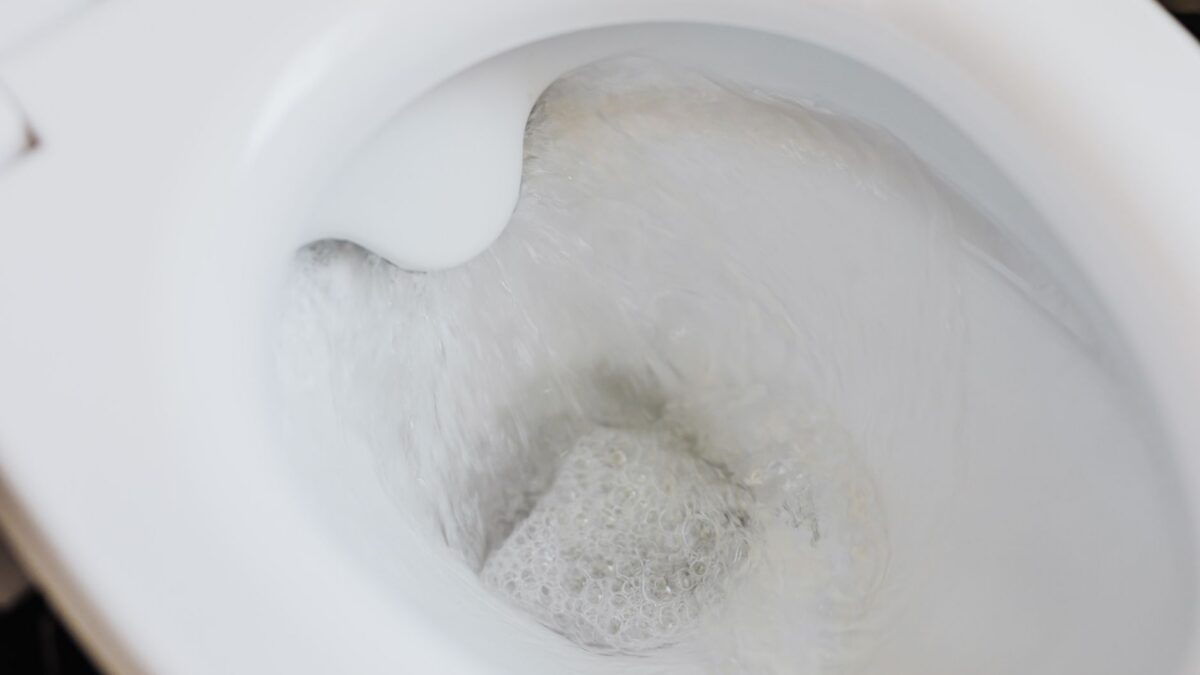
Toilet bowl stains come from minerals in the water, and the color tells you which one. White or gray chalky rings at the waterline are hard water scale (calcium and magnesium), orange or reddish-brown streaks are iron and rust, and dark brown or black marks often come from manganese or from mold. Scale and rust dissolve in mild acid, so a toilet-safe acidic cleaner and a scrub usually removes them in one or two rounds.
Always use one product at a time. Never mix toilet cleaners with bleach, ammonia or each other, because the fumes can be dangerous. Follow the label, open a window or run the fan, and wear rubber gloves.
What causes rings and stains in a toilet bowl?
Water that sits still leaves its minerals behind. Each flush deposits a thin film at the waterline, and over weeks it builds into a ring.
- Hard water leaves a hard, pale, crusty band exactly where the water level sits.
- Iron in well water or old pipes leaves orange to rust-brown streaks, often under the rim and around the drain.
- Manganese leaves dark brown to black stains that look like dirt but do not wipe off.
- Mold and bacteria leave pink, gray or dark patches that wipe away more easily than mineral stains.
- A slowly leaking flapper lets water trickle down the bowl, which draws a line of stain from under the rim to the water.
Matching the stain to its cause saves time. Bleach, for example, does little to scale and can set some iron stains.
How do you remove a hard water ring?
Lower the water in the bowl, apply an acid-based product to the ring, let it sit, then scrub. Mineral scale needs contact time, not force.
- Put on gloves. Turn off the water supply valve behind the toilet and flush once to empty most of the water, or push the water down with a toilet brush.
- Apply a toilet bowl cleaner made for scale, or pour white vinegar around the ring so it clings to the exposed porcelain. Packing paper towels soaked in vinegar against the ring keeps the acid in contact with the stain.
- Wait at least 30 minutes for vinegar, or the time the product label gives. For stubborn rings, leave vinegar-soaked towels overnight.
- Scrub with a stiff nylon brush, then flush.
- Turn the water back on.
For a thick ring that is still there, a wet pumice stone made for toilets removes scale from glazed porcelain without scratching it when you keep the stone and the surface wet and use light pressure. Test on a spot you cannot see first. Our guide to hard water stains on glass, faucets and toilets covers the other fixtures in the bathroom.
How do you get rust and brown stains out of a toilet?
Rust responds to products with oxalic acid, citric acid or a rust remover labeled safe for toilets. These dissolve iron without the harm that harsh scrubbing does.
- Apply the product to the stained area, wait the time on the label, scrub and flush.
- Citric acid powder dissolved in warm water works on light rust and is milder than most commercial removers.
- Do not use chlorine bleach on rust. It can turn iron stains darker.
- Repeat the treatment for streaks that have been there a long time. Several light passes beat one long soak.
The same chemistry works elsewhere in the house, as described in our guide to removing rust stains from fabric, sinks and tubs. If the brown stain is dark and does not respond to an acid cleaner, manganese is a likely cause, and a water test will tell you more than another round of scrubbing.
What should you avoid when cleaning a toilet stain?
Avoid mixing products, abrasive tools and anything the label does not allow for toilets.
- Never combine bleach with an acidic cleaner, vinegar or ammonia.
- Skip steel wool, wire brushes and scouring pads, which scratch the glaze and give stains a rough surface to grip.
- Do not leave strong acid in the bowl for longer than the label allows.
- Keep cleaners out of reach of children and pets, and keep the lid down while a product soaks.
If someone breathes fumes or swallows a cleaner, call Poison Control at 1-800-222-1222 in the US or emergency services. The EPA’s Safer Choice program lists products that meet its ingredient standards if you want a milder option.
How do you keep stains from coming back?
Regular light cleaning stops scale before it hardens, and fixing the water source stops it for good.
- Brush the bowl once or twice a week with a toilet-safe cleaner so the film never builds.
- Flush rarely used toilets now and then. Standing water leaves the thickest rings.
- Check the flapper if the toilet runs or refills on its own. Adding a few drops of food coloring to the tank and waiting 15 to 20 minutes shows whether color seeps into the bowl without a flush.
- Consider a water test if rust or dark stains return soon after cleaning. A water softener or iron filter treats the cause, not just the stain.
Quick answers
Is vinegar enough for a toilet ring?
Vinegar dissolves light scale and works well on new rings. Old, thick rings usually need a stronger toilet-safe acid cleaner or a wet pumice stone. Do not combine it with bleach.
Why does the stain come back a few days after cleaning?
The water supply is still delivering the minerals, or a leaking flapper keeps water running down the bowl. Clean the bowl, then check for a leak and consider a water test.
Can I leave a cleaner in the bowl overnight?
Only if the label says so. Vinegar is the usual choice for an overnight soak. Commercial acid cleaners have a maximum contact time printed on the bottle.
Is a pumice stone safe on all toilets?
It is safe on vitreous china when kept wet and used gently. Do not use it on colored or coated bowls, plastic seats or other fixtures that could scratch.