How to Remove Soap Scum From Tile, Glass, Tubs and Fixtures
Soap scum is what happens when bar soap meets hard water. It lifts with the right mix of warm water, detergent and patience, and a few habits keep it from coming back.
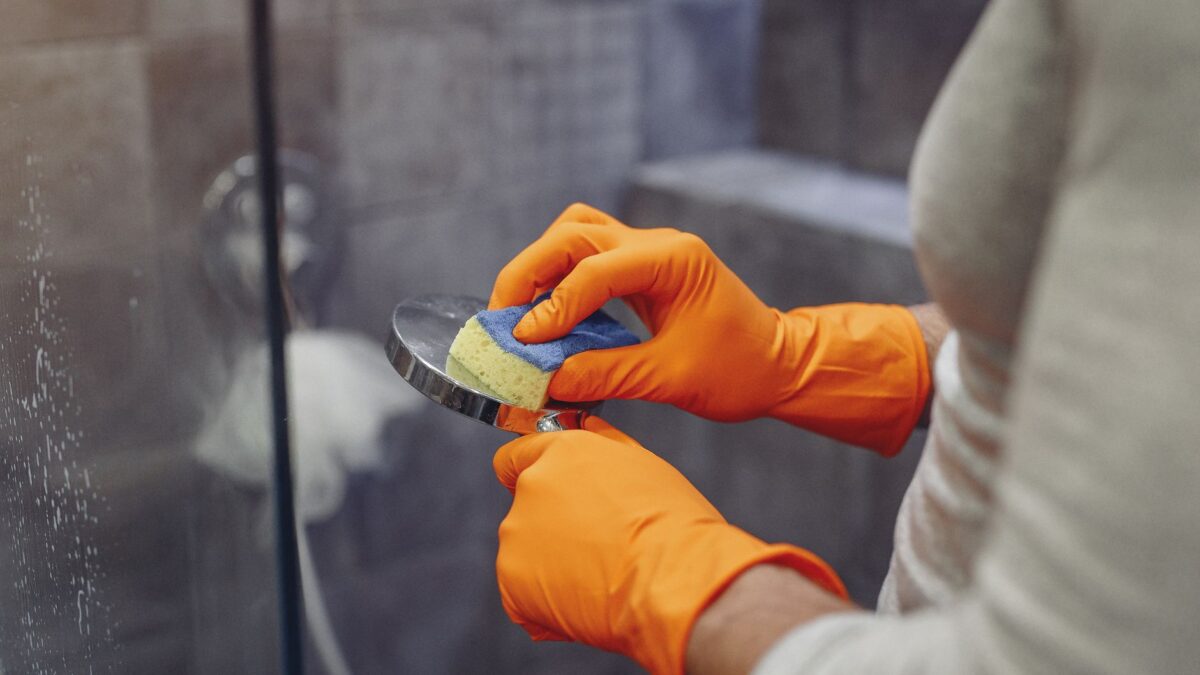
Soap scum is a waxy film that forms when soap reacts with the minerals in hard water. To remove it, wet the surface with warm water, apply dish soap or a non-abrasive bathroom cleaner, let it sit 5 to 10 minutes, scrub with a non-scratch sponge and rinse. On glass, glazed tile, porcelain and chrome, a follow-up of plain white vinegar dissolves the mineral part. Keep vinegar off natural stone, and never combine it, or any acid cleaner, with bleach.
What soap scum actually is
Traditional bar soap is made from fats and oils. When it meets the calcium and magnesium dissolved in hard water, part of it turns into an insoluble residue that does not rinse away. That residue, mixed with skin oils, dirt and dead skin, dries into the dull gray-white film on tub walls, glass doors and faucets.
Soap vs detergent
Most liquid body washes, shampoos and dish soaps are synthetic detergents rather than true soap. Detergents are formulated to stay dissolved in hard water, so they leave much less scum. That is why switching from bar soap to a liquid body wash often cuts down the problem noticeably, and why a detergent-based cleaner is a good first step for removing scum.
What you need
- Dish soap, or a non-abrasive bathroom cleaner
- Distilled white vinegar in a labeled spray bottle
- Baking soda
- Non-scratch scrub sponge, microfiber cloths, old toothbrush
- Squeegee
- Gloves
Step by step
- Ventilate and put on gloves.
- Warm the surface. Run hot water in the shower for a minute with the door or curtain closed. Warm scum softens.
- Apply detergent. Spray warm water with a little dish soap, or a non-abrasive bathroom cleaner, and let it sit 5 to 10 minutes. Dwell time does much of the work.
- Scrub with a non-scratch sponge. Use a toothbrush on corners, faucet bases and around the drain.
- Rinse thoroughly with plain water.
- Vinegar step for leftover haze on surfaces that tolerate acid (see the table). Spray, wait 5 to 10 minutes, scrub again, and rinse well.
- Baking soda for stubborn spots. A paste of baking soda and water adds gentle scrubbing power. Rinse it off completely. Use baking soda and vinegar separately, rinsing between them; mixing them just neutralizes both.
- Dry with a squeegee or towel.
Safe removers by surface
| Surface | Use | Avoid |
|---|---|---|
| Glazed ceramic or porcelain tile | Detergent, vinegar, baking soda paste | Wire brushes; frequent acid soaks on cement grout |
| Uncoated glass doors | Detergent, vinegar, squeegee | Scouring powders, steel wool |
| Coated glass | Only cleaners the glass maker lists | Abrasives, razor blades, unlisted acids |
| Acrylic and fiberglass tubs | Detergent, non-abrasive cleaners, diluted vinegar briefly | Abrasive powders and pads, pumice, solvents |
| Porcelain enamel tubs | Detergent, mild cleansers, vinegar briefly | Steel wool, harsh acids left to sit |
| Chrome fixtures | Detergent, vinegar, soft cloth | Scouring pads |
| Brushed, matte or colored fixtures | Mild soap and water | Acids and scale removers unless the maker allows them |
| Marble, travertine, limestone | pH-neutral stone cleaner, soft cloth | Vinegar, lemon, any acid; abrasive cleansers |
Specific guides: glass shower doors, bathtubs by material, and grout.
Commercial soap scum removers
Store-bought soap scum removers are often either acidic (to dissolve minerals) or contain strong surfactants and solvents. They can save time on heavy buildup. Read the label for which surfaces it lists and the dwell time, ventilate well, and wear gloves. Do not use two commercial cleaners together or one right after the other without rinsing. If you prefer products reviewed for safer ingredients, the U.S. EPA’s Safer Choice program labels qualifying cleaners.
The mixing rules
- Never mix bleach with vinegar, lemon juice or any acidic cleaner (toilet-bowl cleaners, lime and rust removers). The combination releases chlorine gas.
- Never mix bleach with ammonia or rubbing alcohol.
- Never mix vinegar and hydrogen peroxide in one container.
- Rinse the surface with water between products.
How to prevent soap scum
- Squeegee after every shower. It removes water and residue before they dry.
- Switch to liquid body wash if you use bar soap and see heavy buildup.
- Run the exhaust fan to dry surfaces faster.
- Weekly quick clean with a detergent spray so the film never thickens.
- Consider water hardness. Your water utility’s annual quality report usually lists it. In very hard water areas a softener reduces scum and scale throughout the house.
Soap residue is also food for the bacteria behind pink film in the shower, so less scum usually means less pink, too.
Safety basics
Follow product labels, ventilate the room, wear gloves, test on a hidden spot, and keep cleaners in their original containers, away from children and pets. If someone swallows, inhales or gets a cleaning product in the eyes, call Poison Control at 1-800-222-1222 (US) or emergency services.
Bottom line
Soap scum is soap plus hard water. Soften it with warm water, lift it with detergent and dwell time, finish with vinegar on acid-safe surfaces, rinse and dry. Keep acids off stone and away from bleach. A squeegee and liquid body wash prevent most of it.
FAQ
Does vinegar remove soap scum?
It dissolves the mineral part well, especially after a detergent wash. Use it only on surfaces that tolerate acid, and never with bleach.
Why does soap scum come back so fast?
Hard water and bar soap. Squeegeeing after each shower and switching to a liquid body wash slow it down significantly.
Can I use a melamine sponge on soap scum?
On glazed tile and enamel, often yes. It is a fine abrasive, so avoid it on acrylic, coated glass and glossy fixture finishes.
Is soap scum harmful?
Not in itself, but it gives mold and bacteria something to feed on in a damp shower.