How to Choose an Air Purifier: CADR, Room Size, HEPA and Running Costs
CADR and room size come first, then a true HEPA filter you can afford to replace. Skip anything that produces ozone.
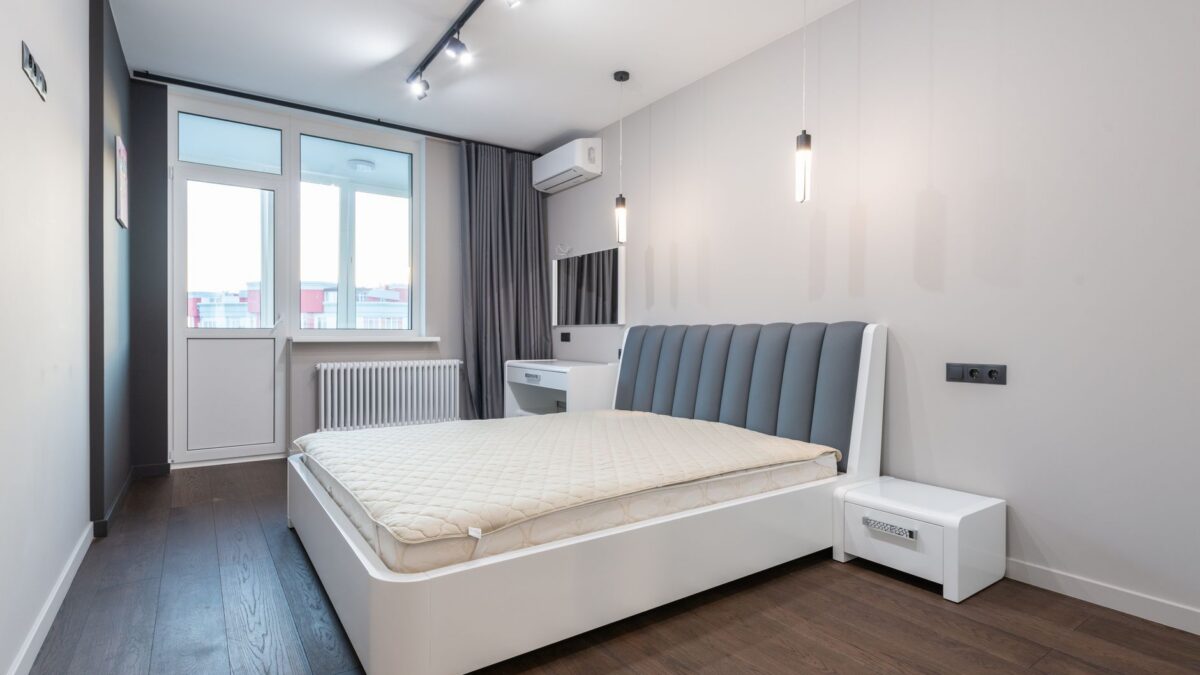
Choose a portable air purifier by its CADR (clean air delivery rate) for your room size: the EPA’s rule of thumb is a smoke CADR of at least about two-thirds of the room’s floor area — for example, at least 260 for a 400-square-foot room with 8-foot ceilings. Look for a true HEPA filter (not “HEPA-type”), check the yearly cost of replacement filters and the noise at the speed you’ll actually use, and avoid ozone generators. An ENERGY STAR model will cost less to run.
Step one: measure the room
Multiply length by width to get square feet. If the room opens into another space, count both. The EPA notes its sizing assumes 8-foot ceilings; for higher ceilings, choose a unit rated for a larger area.
| Room area (sq ft) | Minimum smoke CADR (cfm), EPA estimate |
|---|---|
| 100 | 65 |
| 200 | 130 |
| 300 | 195 |
| 400 | 260 |
| 500 | 325 |
| 600 | 390 |
Source: the EPA’s Guide to Air Cleaners in the Home. A bigger unit running on a lower, quieter speed often works better in practice than a small unit running flat out.
Understanding CADR
CADR measures how much filtered air a purifier delivers, in cubic feet per minute, tested at its highest fan speed. Units certified through the AHAM Verifide program list three CADRs:
- Smoke — the smallest particles; use this number for sizing.
- Dust — medium particles.
- Pollen — the largest particles.
Be cautious with “covers up to X square feet” claims on product listings. Some are based on cleaning a room’s air only once an hour, which gives a much bigger number than the EPA’s sizing. When in doubt, compare the smoke CADR against the table above. CADR does not apply to gases and odors.
Filters: true HEPA, “HEPA-type” and carbon
| Label | What it means |
|---|---|
| HEPA / true HEPA | Under the widely used US Department of Energy definition, captures at least 99.97% of particles 0.3 microns in diameter |
| H13 (EN 1822) | European class, rated at 99.95% at the most penetrating particle size; tested differently from the US definition |
| “HEPA-type,” “HEPA-like” | Marketing terms with no standard; performance can be much lower |
| Activated carbon | Adsorbs some gases and odors; doesn’t remove particles; amount of carbon varies widely |
| Pre-filter | Catches hair and large dust, protecting the main filter; often washable or vacuumable |
A true HEPA or H13 filter is a sensible choice for dust, pollen, pet dander and smoke particles. If odors or cooking smells are your main issue, look for a substantial carbon filter, but remember source control and ventilation come first.
Avoid ozone and be careful with “extras”
The EPA advises avoiding air cleaners that intentionally produce ozone, a lung irritant, and notes that no federal agency has approved ozone generators sold as air cleaners for use in occupied spaces. Some ionizers, electrostatic precipitators and plasma devices may also emit ozone. Two practical checks:
- Look for models on the California Air Resources Board’s certified list. CARB tests electronic air cleaners to emit no more than 0.050 parts per million of ozone. Certification covers ozone and electrical safety, not how well the unit cleans.
- If a model has an ionizer or UV feature, see whether you can switch it off. A filter-only unit avoids the question.
Running costs: filters and electricity
Replacement filters
Filters are the biggest ongoing cost. Before buying, look up the price of replacement filters for that exact model and the maker’s suggested replacement interval, then work out a yearly cost. Intervals depend on use and air quality; a clogged filter reduces performance, and some units have filter-life indicators. Check that filters are easy to buy and that the unit doesn’t lock you into one expensive source.
Electricity
Air purifiers often run for many hours a day. According to ENERGY STAR, certified room air cleaners are more than 50% more energy-efficient than standard models. ENERGY STAR’s efficiency measure compares CADR to watts used, so a higher CADR per watt means lower running costs for the same cleaning.
Noise
Makers usually list noise in decibels at the lowest and highest speeds. The highest-speed number goes with the CADR rating; the low-speed number is what you’ll hear at night. For bedrooms, look for a quiet low setting, a sleep mode and the option to dim display lights.
Other features
- Air quality sensor and auto mode — convenient, though sensors vary in accuracy.
- Filter-change indicator — usually timer-based, not a real measurement.
- Apps and Wi-Fi — optional; check whether the unit works fully without them.
- Size and placement — leave space around air intakes and outlets as the manual specifies.
What an air purifier won’t do
Air purifiers help with airborne particles, but they don’t remove dust that has settled on surfaces, can’t fix mold caused by moisture and won’t replace ventilation. For allergies, combine one with the steps in how to reduce dust in your house and how to get rid of dust mites. Our article do air purifiers help with allergies? looks at what to expect. For health symptoms, talk to a doctor.
Quick buying checklist
- Measure the room and find the minimum smoke CADR.
- Choose a true HEPA (or H13) filter; add carbon if odors matter.
- Skip ozone generators; prefer filter-only or CARB-certified units.
- Price the replacement filters for a year.
- Check the low-speed noise level for bedrooms.
- Prefer ENERGY STAR for lower electricity use.
Bottom line
Size by smoke CADR — at least about two-thirds of the room’s square footage — and buy a true HEPA unit with affordable filters and a quiet low setting. Avoid anything that makes ozone, and treat an air purifier as one part of a clean-air plan alongside dusting, vacuuming, ventilation and humidity control.
FAQ
Should an air purifier run all the time?
Many people run them continuously at a low speed, which keeps particle levels down more consistently. An auto mode or ENERGY STAR model keeps electricity use in check.
Is H13 better than true HEPA?
They’re tested under different standards and both are high-efficiency particle filters. Either is a good choice; the CADR and sealing of the unit matter as much as the filter label.
Do air purifiers remove odors?
Only units with activated carbon filters reduce some odors and gases, and results vary. HEPA filters alone don’t remove smells.
Are ionizers safe?
Some ionizers and other electronic air cleaners can emit ozone. If you choose one, look for CARB certification, and consider a filter-only unit if you want to avoid ozone entirely.