How to Clean a Mattress: Vacuum, Spot-Clean Stains and Deodorize
A mattress can't go in the washer, and too much liquid can lead to odor and mold inside the foam. Here is how to clean one with minimal moisture.
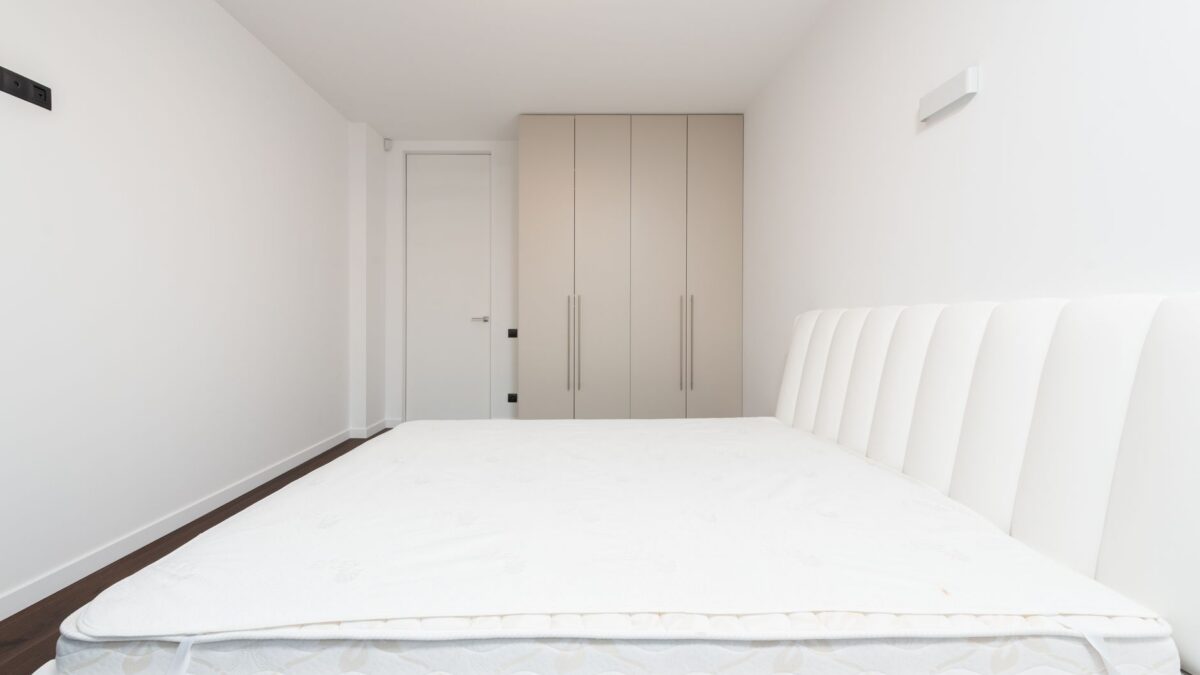
To clean a mattress, strip the bed and vacuum the whole surface with an upholstery attachment, then spot-clean stains with a cloth dampened in a mild detergent solution, blotting rather than rubbing, and use as little liquid as possible. Sprinkle baking soda over the top, leave it for several hours, vacuum it up, and make sure the mattress is completely dry before you put sheets back on. Never soak a mattress: moisture trapped inside can cause odors and mold.
Check the label first
Look at the law label and any care tag sewn on the mattress, plus the manufacturer’s website. Some makers specify which cleaners are allowed, and memory foam makers commonly tell owners to spot-clean only and not saturate the foam. Using harsh chemicals against the maker’s guidance may also affect warranty coverage. Note any zippered cover: many foam mattresses have covers that should not be removed and washed, even if they unzip, because they can shrink and be hard to refit.
What you need
- Vacuum with an upholstery tool and crevice tool
- White cloths or white paper towels
- Mild liquid laundry detergent or clear dish soap
- Spray bottle and cool water
- Enzyme cleaner for urine and other organic stains (optional)
- 3% hydrogen peroxide for light-colored fabric only (optional, test first)
- Baking soda and a fine sieve
- Fan, sunny room or dehumidifier for drying
Step-by-step: cleaning a mattress
- Strip the bed and wash the bedding. Wash sheets, pillowcases and the mattress protector according to their care labels while you work on the mattress.
- Vacuum slowly. Go over the top, sides and, if you can flip or lift it, the underside. Use the crevice tool along seams and the edge piping, where dust and skin flakes collect.
- Spot-clean stains using the methods below. Work on one stain at a time.
- Deodorize. Sift a thin layer of baking soda over the surface. Leave it for several hours or as long as you can, keeping pets off.
- Vacuum again to remove the baking soda.
- Dry completely. Open windows, run a fan or dehumidifier, and let any damp spots dry fully, which can take several hours. Press a dry paper towel on cleaned areas; if it picks up moisture, wait.
- Put on a protector before remaking the bed.
How to remove common mattress stains
| Stain | Method | Don’t |
|---|---|---|
| Sweat and body oil (yellowing) | Blot with a cloth dampened in mild detergent solution; follow with a cloth dampened in plain water; blot dry | Scrub hard or pour liquid on |
| Urine | Blot up as much as possible; apply an enzyme cleaner per label; blot; dry thoroughly | Use bleach, which reacts with ammonia in urine |
| Blood | Cold water only; blot; mild detergent; on white fabric, a dab of 3% hydrogen peroxide after a spot test | Use hot water, which sets protein stains |
| Vomit | Remove solids, blot, enzyme cleaner; ventilate | Rub it into the fabric |
| Coffee, tea, juice | Blot; mild detergent solution; plain-water blot | Let it soak in before treating |
A note on hydrogen peroxide
Household 3% hydrogen peroxide can lighten blood and some organic stains on white or very light fabric, but it may also lighten colored fabric. Test on a hidden area, use only a small amount on a cloth, and blot with water afterward. Never mix it with vinegar in the same container, and don’t use it together with other cleaners.
A note on urine
Urine soaks into the comfort layers quickly. Fast blotting gets most of it out; an enzyme cleaner helps break down what’s left. If a large amount soaked deep into the mattress, surface cleaning may not fully remove the odor. A waterproof protector is the best prevention, especially for children, older adults and pets that share the bed.
With any cleaner, read and follow the label, ventilate the room, wear gloves if the label says so, and keep products away from children and pets. Never mix bleach with ammonia, vinegar or other cleaners. If someone swallows, inhales or gets a cleaning product in the eyes, call Poison Control at 1-800-222-1222 (US) or emergency services.
Why you should never soak a mattress
Mattresses contain foam, fiber batting and, in many cases, coils. None of these dry quickly once wet. Moisture trapped inside can lead to musty odors and mold growth that you can’t clean out. Keep spot cleaning to the surface and dry each spot before moving on. If a mattress gets soaked by a leak or flood, it usually needs to be replaced; EPA’s mold guidance notes that porous materials that stay wet can become a source of mold growth.
Steam cleaners and upholstery machines
Handheld upholstery cleaners and steamers can work on some innerspring mattresses, but they add moisture, and many foam mattress makers advise against it. If you use one, check both the mattress and the machine manuals, use the lowest setting, make one pass, extract as much water as possible, and dry the mattress fully.
Dust mites and allergies
Vacuuming and baking soda don’t remove dust mites from inside a mattress. The Asthma and Allergy Foundation of America recommends allergen-proof encasings for mattresses and pillows and washing bedding in hot water weekly. For more, see our guide to getting rid of dust mites and how often you should wash your sheets. If you have allergy or asthma symptoms, talk with a doctor.
Protect it and it stays clean
- Use a washable, waterproof protector and wash it according to its label.
- Rotate the mattress as the maker recommends to even out wear.
- Let the bed air out for a while in the morning before making it.
- Avoid eating in bed; crumbs attract pests.
Bottom line
Vacuum, spot-clean with a barely damp cloth, deodorize with baking soda, and dry completely. Use cold water and an enzyme cleaner for organic stains, and skip bleach. A waterproof protector saves you from most of this work next time.
FAQ
How often should I clean my mattress?
Vacuum it every few months, or whenever you rotate it. Spot-clean stains as soon as they happen.
Does baking soda really clean a mattress?
It absorbs some odors and is easy to vacuum up, but it doesn’t remove stains, kill dust mites or disinfect. Think of it as a deodorizing step.
Can I put a mattress outside in the sun?
Airing a mattress in dry, sunny weather can help it dry and freshen. Keep it off damp ground and bring it in before evening dew. Long sun exposure may fade fabric.
When should I replace a mattress instead of cleaning it?
If it has deep odors that return after cleaning, visible mold, flood damage, or sagging that affects comfort, replacement is usually the better choice.