How to Choose a Vacuum Cleaner: Types, Specs and Filtration Explained
Start with your floors and layout, not the wattage. This guide explains vacuum types, power specs, filtration and the running costs to check.
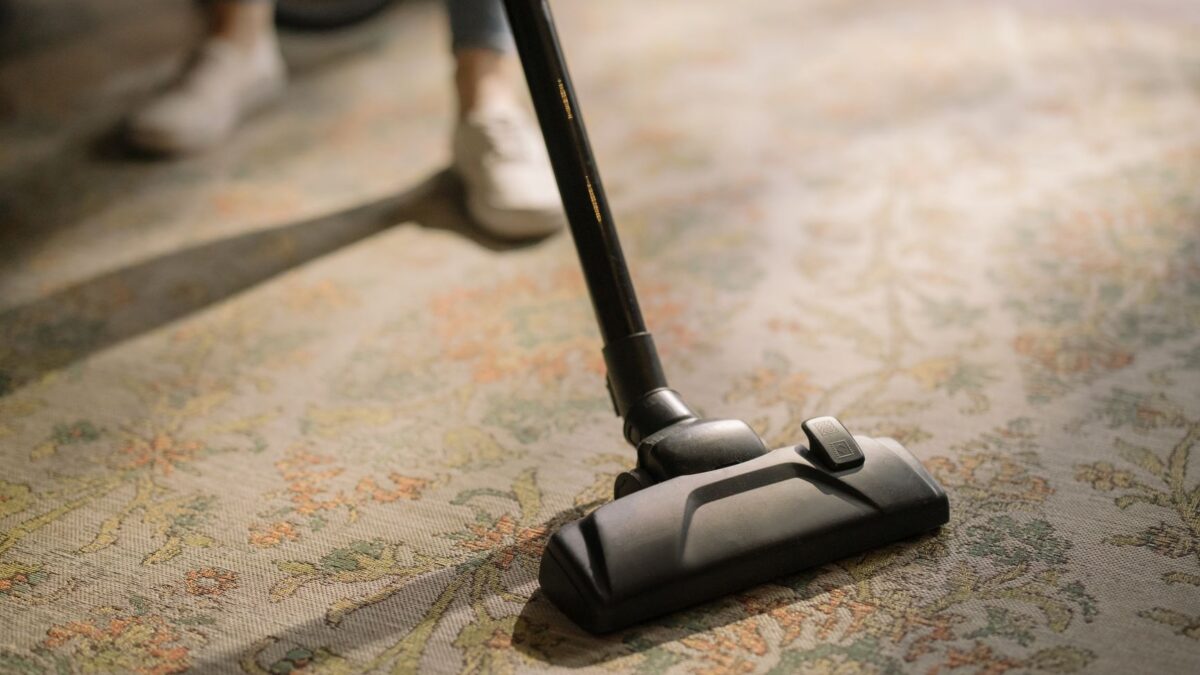
Pick the vacuum type by your floors and your home’s layout first, then compare specs. Uprights are strongest on wall-to-wall carpet, canisters are best for mixed floors, stairs and under furniture, cordless sticks trade some power and runtime for convenience, and handhelds are for spills and cars, not whole homes. If anyone in the house has allergies, look for a sealed system with a HEPA filter, and consider a bagged model.
If your current vacuum still runs, check it before replacing it: a clogged filter, full bag, tangled brush roll or blocked hose causes most “it lost suction” complaints.
The four main types
| Type | Best for | Trade-offs |
|---|---|---|
| Upright | Large carpeted areas; wide cleaning path; usually large bin or bag | Heavy; awkward on stairs; attachments via a hose that can feel short |
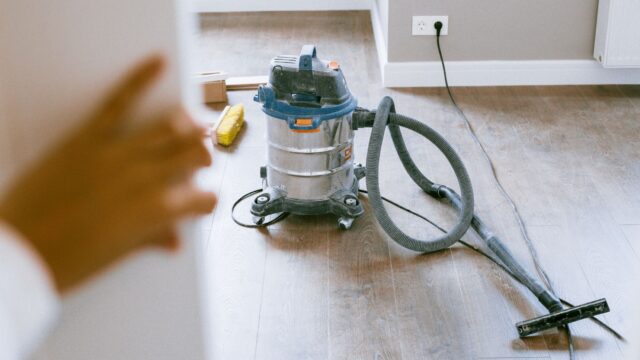
| Canister | Mixed hard floors and rugs, stairs, under furniture, drapes | You pull a body behind you; storage takes more space |
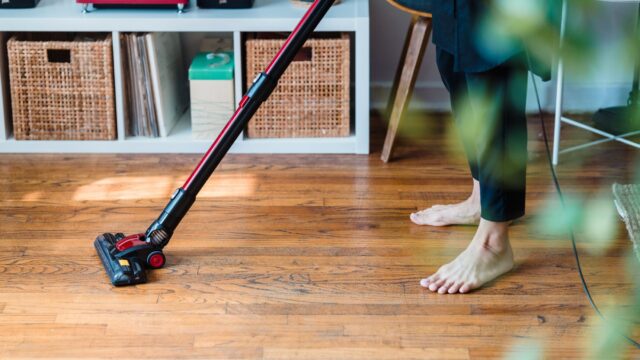
| Cordless stick | Quick daily cleans, small homes, apartments, stairs in handheld mode | Limited runtime, small bin, battery wears out over years |
| Handheld | Crumbs, spills, cars, upholstery, pet beds | Not practical for whole-floor cleaning |
Robot vacuums are a separate category built for daily upkeep — see robot vacuum vs cordless vacuum if you’re weighing one.
Understanding power specs
Vacuum boxes list power in several ways, and they don’t measure the same thing:
- Watts (motor input). How much electricity the motor draws. It does not tell you how well the vacuum cleans.
- Airflow (CFM). How much air moves through the machine. Airflow carries dirt into the bin, so it matters a lot on hard floors and for picking up light debris.
- Suction / water lift. How strongly the vacuum pulls, which helps lift embedded dirt from carpet. Robot and stick makers often quote suction in pascals (Pa).
- Air watts. A combined figure some makers use for cordless and canister models.
Because brands test differently, these numbers are most useful for comparing models from the same maker. Across brands, the brush head design, seal quality and hose length often make as much difference as the headline figure.
Filtration: sealed HEPA vs “HEPA-type”
A true HEPA filter, under the widely used US Department of Energy definition, captures at least 99.97% of particles 0.3 microns in diameter. But a HEPA filter only helps if the air actually goes through it. A sealed system has gaskets so air can’t leak out around the filter or through gaps in the body. A vacuum with a HEPA filter but leaky seams can still blow fine dust back into the room.
Watch the wording: “HEPA-type,” “HEPA-like” or “HEPA-style” are marketing terms, not a standard. If filtration matters to you, look for a stated filtration standard and a sealed or “whole-machine” filtration claim from the maker.
Bagged vs bagless
| Bagged | Bagless | |
|---|---|---|
| Emptying | Dust stays sealed in the bag; less mess when you change it | You empty a bin; dust can puff out |
| Ongoing cost | Replacement bags | No bags; filters still need washing or replacing |
| Performance over time | Suction can fall as the bag fills; change before it’s packed full | Suction can fall as filters clog; clean them on schedule |
| Good for | Allergy sufferers, people who dislike dust when emptying | People who want to see what’s collected and avoid buying bags |
If you have allergies or asthma, empty a bagless bin outdoors or into a bag held close to the bin. The EPA’s indoor air quality pages are a good starting point for reducing dust and allergens at home more broadly.
Match the vacuum to your floors
Mostly carpet
Look for a motorized brush roll with adjustable height (or automatic adjustment), strong suction, and a wide cleaning path. Uprights and powered canisters do well here.
Mostly hard floors
Look for a soft roller or a brush roll you can switch off, good airflow, and rubber or soft wheels that won’t scratch. A spinning stiff brush can scatter debris and, on some finishes, leave marks — check your flooring maker’s care guide. Our guides to cleaning hardwood floors and vinyl plank floors cover what each surface tolerates.
Mixed floors and rugs
A canister with a carpet head plus a hard-floor tool, or a stick vacuum with two heads, handles transitions best.
Pets
Hair wraps around brush rolls, so look for a brush roll that’s easy to remove or designed to resist tangles, a mini motorized tool for upholstery, and a larger bin.
Other features worth checking
- Weight — especially if you’ll carry it up stairs.
- Cord length or runtime — runtime is usually quoted in the lowest power mode.
- Bin or bag capacity.
- Noise — some makers list decibels; compare within the same type.
- Attachments — crevice tool, dusting brush, upholstery tool.
- Parts availability — filters, belts, brush rolls and batteries you can actually buy later.
- Warranty length and whether the battery is covered.
How to decide, step by step
- List your floor types and roughly how much of each.
- Note stairs, pets and allergy needs.
- Choose the type from the table above.
- Shortlist models with a sealed system if filtration matters.
- Compare runtime (cordless), weight, bin size and brush design.
- Check the price and availability of filters, bags and batteries.
- Check for recalls on the model before buying second-hand.
Budget ranges
Prices vary widely by type and region. As of October 2026, you can find basic corded uprights, canisters and handhelds at budget prices, while premium cordless sticks and high-end canisters cost several hundred dollars. More money usually buys longer runtime, better filtration and sealing, smarter brush heads and longer warranties — not necessarily better cleaning on your floors. A well-chosen mid-range corded vacuum is often the best value for carpet.
Bottom line
Start with your floors and layout, not the wattage. Uprights for carpet, canisters for mixed floors and stairs, cordless sticks for convenience, handhelds for spot jobs. For allergies, choose a sealed system with a true HEPA filter. Then check the running costs: bags, filters and batteries.
FAQ
Is higher wattage better?
Not necessarily. Watts measure the electricity the motor uses, not cleaning performance. Airflow, suction, brush design and sealing matter more.
Do I need a HEPA vacuum?
Not everyone does, but it’s worth considering if someone in the home has allergies or asthma. Make sure the vacuum is sealed so air actually passes through the filter.
Bagged or bagless for pet hair?
Both work. Bagged models keep hair and dander contained when emptying; bagless models avoid bag costs but need regular filter cleaning.
How often should I replace vacuum filters?
Follow the maker’s schedule in the manual. Washable filters should be rinsed as directed and dried completely before refitting.