How to Choose a Dishwasher: Size, Noise, Racks, Tub and Efficiency
Most dishwashers clean well enough; the differences are size, noise, rack flexibility and upkeep. Here's how to read the spec sheet before you buy.
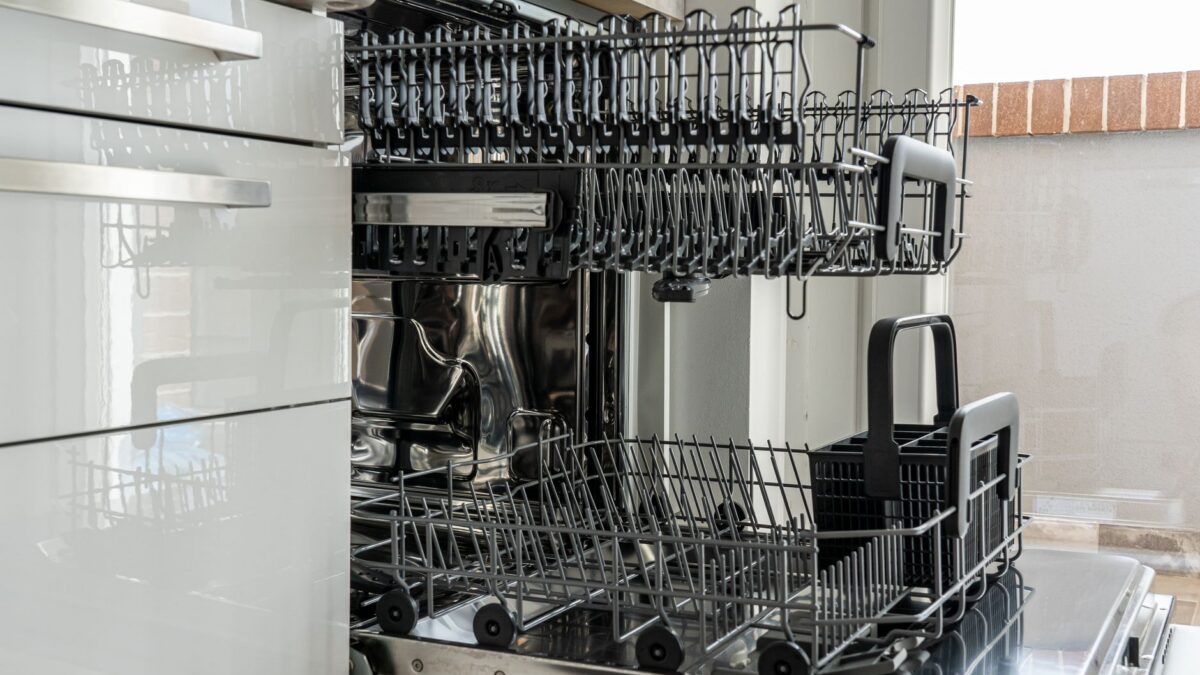
Start with size: most U.S. kitchens have a standard 24-inch-wide opening, and compact models are usually 18 inches wide. Then compare noise (the maker’s dBA figure; lower is quieter), rack layout (a third rack and adjustable tines add flexibility), tub material, filter type and whether the model is ENERGY STAR certified. Measure your opening before you shop, and check the installation requirements for your water, drain and electrical connections.
Size: 24-inch vs 18-inch
| Type | Typical width | Good for | Trade-off |
|---|---|---|---|
| Standard built-in | About 24 inches | Most households | Needs a full-width cabinet opening |
| Compact / slimline built-in | About 18 inches | Small kitchens, one or two people | Fewer place settings, less room for pans |
| Countertop | Varies | Rentals, no cabinet space | Small capacity, connects to the faucet or a tank |
| Portable (rolling) | Usually 18 or 24 inches | Kitchens without plumbing hookup | Connects to the faucet, takes floor space |
| Drawer models | About 24 inches | Small loads, accessibility | Higher price, smaller per-drawer capacity |
ENERGY STAR classifies dishwashers by capacity rather than width: a “compact” model holds fewer than eight place settings plus six serving pieces under the industry test, and a “standard” model holds at least that. Measure the width, height (with adjustable legs) and depth of your opening, and allow for the door to open fully past nearby cabinets, an island or an oven handle.
Noise: how to read dBA
Manufacturers list a noise level in A-weighted decibels (dBA). Lower numbers are quieter, and because the decibel scale is logarithmic, a few dBA can be a noticeable difference. Keep in mind:
- Figures are measured under each maker’s conditions, so treat small differences between brands with caution.
- Open-plan kitchens and apartments benefit most from quieter models.
- Installation matters: a unit that is not level or not secured to the counter can rattle.
Racks and loading
- Third rack: a shallow top tray for cutlery, utensils and small items, freeing space in the lower rack.
- Adjustable upper rack: lets you raise or lower it to fit tall glasses or large plates.
- Fold-down tines: make room for pots and mixing bowls.
- Cutlery basket vs third rack: some people prefer a basket for speed, others a tray for neat spacing. Some models offer both.
Before buying, check that your largest plates fit and that tall items do not block the spray arms or the detergent door.
Tub material
| Tub | Pros | Cons |
|---|---|---|
| Stainless steel | Resists stains and odors, retains heat which can help condensation drying | Usually costs more |
| Plastic (polypropylene) | Lower price | Can stain (for example from tomato sauce) and may hold odors |
Filters: manual-clean vs self-cleaning
Many newer dishwashers use a manual filter that you twist out and rinse regularly. These tend to be quieter. Others use a self-cleaning filter with a grinder that chops food particles, which needs less attention but can be louder. Either way, the manual will tell you how to remove and clean it, and our guide to cleaning a dishwasher covers the filter, spray arms and door seal.
Drying methods
- Heated dry: an element warms the air; effective but uses more energy.
- Condensation dry: water condenses on the cooler tub walls; quieter and efficient, but plastics may stay damp.
- Fan-assisted or door-opening dry: some models vent steam or pop the door open at the end.
- Rinse aid: most makers recommend it to help water sheet off, especially with condensation drying.
Cycles and sensors
A soil sensor that adjusts water and time to the load is common. Beyond that, you mostly need a normal, a heavy and a quick cycle. Extra cycles such as sanitize, extra hot, or bottle wash add convenience but not always better cleaning for everyday loads. Note that quick cycles often use more energy than eco settings; eco cycles save energy by running longer at lower temperatures.
Efficiency and ENERGY STAR
ENERGY STAR certified dishwashers meet EPA efficiency criteria for energy and water use. Compare the yellow EnergyGuide label for estimated yearly energy cost, and see the ENERGY STAR dishwasher page for current criteria. Running only full loads and scraping rather than pre-rinsing are free ways to save; more ideas are in our energy-saving tips for appliances.
Installation checklist
- Measure the opening and check the door swing clearance.
- Check what the old unit connects to: a hot water supply line, a drain to a disposal or sink tailpiece, and either a hard-wired connection or a plug.
- Find out whether your area requires an air gap or a high drain loop; local plumbing codes vary.
- Decide whether you will need a new supply line, drain hose or power cord kit.
- For gas, electrical or plumbing changes, hire a licensed professional; ask whether delivery includes installation and haul-away.
Bottom line
Measure first, then narrow by width and capacity. Compare noise ratings, rack flexibility and tub material, choose the filter style you are happy to maintain, and favor ENERGY STAR certified models. A dishwasher that fits your kitchen and loads well will serve you better than one with the longest cycle list. Typical lifespans are about a decade; see how long appliances last.
FAQ
Is a quieter dishwasher worth paying more for?
If your kitchen is open to living areas or you run it at night, many people find it worthwhile. In a closed kitchen, it may matter less.
Can I replace a 24-inch dishwasher with an 18-inch one?
Physically, yes, but you will need a filler panel or cabinet to close the gap, and you lose capacity.
Do I need a stainless steel tub?
Not necessarily. Stainless resists stains and odors and helps drying, but plastic tubs clean dishes too and cost less.
Does a dishwasher use more water than hand washing?
Modern efficient dishwashers are designed to use relatively little water per cycle, especially when run with full loads. Hand washing under a running tap can use more, but it depends on habits.