Can You Use a Steam Mop on Hardwood? A Floor-by-Floor Guide
Steam mop makers say "sealed hard floors," but flooring makers often say something stricter. Here is how to read both and decide for each floor in your home.
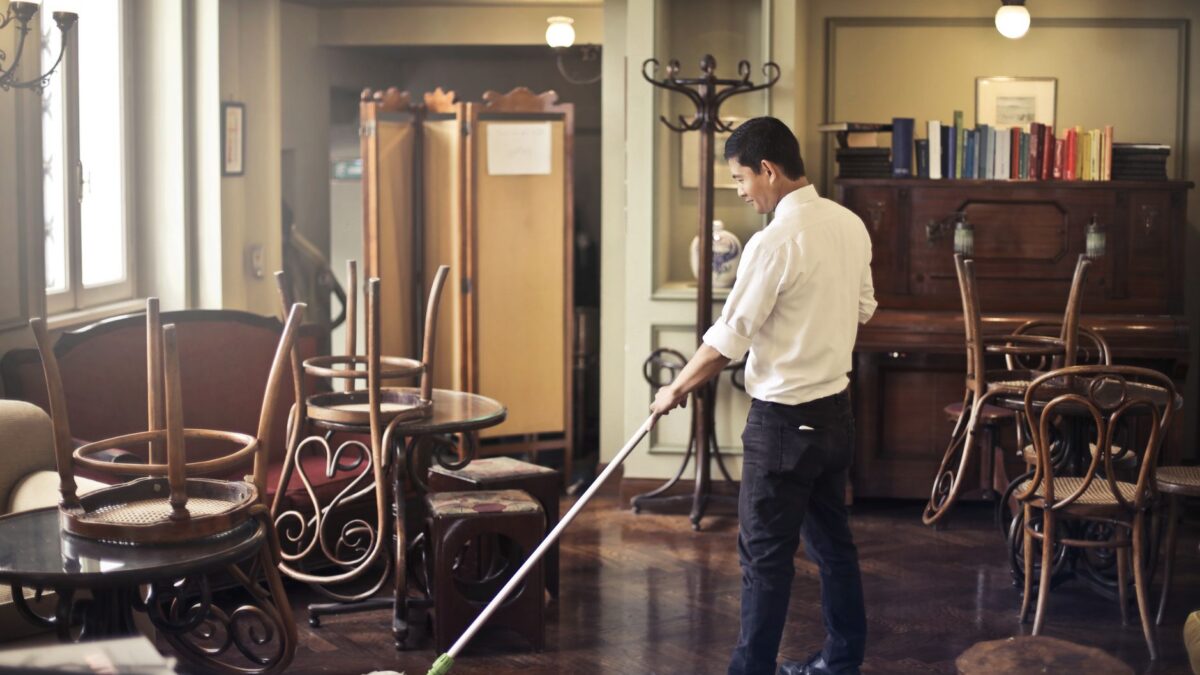
In most cases, you shouldn’t use a steam mop on hardwood. The National Wood Flooring Association’s consumer advice says to steer clear of wet mops and steam mops, because heat and moisture can damage both the finish and the wood over time. Steam mop makers typically limit their products to sealed hard floors and exclude unsealed wood, but your flooring maker’s care guide and warranty matter more than the mop’s box.
Why steam and wood don’t mix
A steam mop pushes hot vapor down onto the floor. On a ceramic tile, that vapor has nowhere to go. On wood, it can find its way into the seams between boards and into tiny scratches in the finish. Repeated exposure can:
- Cloud or soften some finishes, leaving a white haze
- Raise the grain and cause boards to cup or show gaps
- Weaken the finish so it wears through faster
- Loosen adhesives in engineered wood and glued-down floors
The damage is usually gradual, which is why a floor can look fine after the first few uses. The NWFA’s care tips recommend dry cleaning daily and a finish-specific cleaner about once a month instead.
What steam mop makers say
Steam mop manuals and product pages generally say their products are for sealed hard floors. Some brands list sealed hardwood and sealed laminate as acceptable, while specifically excluding unsealed wood and unglazed ceramic. The same makers usually add two important caveats: steam can remove the sheen from waxed and some no-wax floors, and you should test an inconspicuous area and check the floor manufacturer’s care instructions first.
In other words, the mop maker passes the final decision to the flooring maker. And many flooring makers say no.
Steam mop safety by floor type
| Floor type | Steam mop? | Why | Better option |
|---|---|---|---|
| Solid hardwood (sealed) | Not recommended | Wood flooring groups and many finish makers advise against it; moisture and heat enter seams | Damp microfiber mop with wood cleaner |
| Hardwood (unsealed, waxed, oiled) | No | Steam strips wax and oil and soaks into bare wood | Dry cleaning; maker-approved oil or wax care |
| Engineered wood | Only if the maker explicitly allows | Thin veneer and glue layers are vulnerable to heat and moisture | Damp mop with wood cleaner |
| Laminate | Usually no | Steam forced into joints can swell the fiberboard core; often a warranty exclusion | Barely damp microfiber mop |
| Luxury vinyl plank/tile | Depends on warranty | Many makers say not recommended; heat can soften the surface and loosen adhesive | Neutral cleaner plus water rinse |
| Glazed ceramic and porcelain tile | Generally yes | Non-porous surface tolerates heat; good for textured tile | Steam or mop with neutral cleaner |
| Unglazed tile, unsealed grout | Test first or avoid | Porous; moisture can be absorbed; mop makers often exclude unglazed ceramic | Neutral cleaner, seal grout |
| Sealed natural stone | Check the stone installer’s or sealer’s guidance | Heat may affect some sealers; mop makers may list sealed stone as OK | pH-neutral stone cleaner |
How to read your flooring warranty
Look for a “care and maintenance” section, often a separate PDF on the maker’s website. Phrases to watch for:
- “Do not use steam mops” or “steam cleaning not recommended”: treat this as a no. Damage from steam may be excluded from coverage.
- “Avoid excessive water” or “do not wet mop”: steam counts as excess moisture in practice.
- “Damage caused by improper maintenance is not covered”: steaming against the care guide can fall under this.
- “May be cleaned with a residential steam mop on the lowest setting”: some products allow it; follow any conditions given, such as keeping the mop moving.
If you can’t find the paperwork, search the flooring brand and product line plus “care and maintenance.” If you don’t know the brand, assume steam isn’t allowed.
If your floor does allow steam
- Vacuum or sweep first so the pad doesn’t grind grit into the surface.
- Use the lowest steam setting and a clean microfiber pad.
- Keep the mop moving. Never let it rest in one place while steaming.
- Test a small, hidden area and let it dry before doing the whole room.
- Use only water in the tank unless the mop’s manual approves an additive. Never add bleach, vinegar or other chemicals that the manual doesn’t list.
- Stand the mop on its rest or a tray when you stop, not on the floor.
Treat the mop like any hot appliance: keep children and pets away while it’s on, don’t point steam at people, and let it cool before changing pads.
The cheaper alternative that works on almost every floor
A flat microfiber mop with washable pads, a spray bottle and a cleaner suited to your floor will clean hardwood, laminate, vinyl and tile safely. It costs less than most steam mops and doesn’t risk your warranty. Our guides to hardwood, laminate and tile give the full routine for each. If you do want a steam mop for tile, see how to choose one.
What about disinfecting?
Steam mops are often marketed for sanitizing, but cleaning floors with steam is not the same as using an EPA-registered disinfectant according to its label. For most homes, regular cleaning of floors is enough. If you need to disinfect a hard floor after illness, use a registered product labeled for that surface, follow the contact time, ventilate the room, and never combine it with other cleaners. If someone swallows, inhales or gets a cleaning product in the eyes, call Poison Control at 1-800-222-1222 (US) or emergency services.
Bottom line
For hardwood, the answer is almost always no: use a barely damp microfiber mop and a wood floor cleaner instead. Laminate and vinyl depend on the warranty, and many exclude steam. Glazed tile is where a steam mop earns its keep.
FAQ
My steam mop box says it’s safe for sealed hardwood. Is it?
The mop maker is describing its product, not your floor. Wood flooring groups and many floor makers advise against steam, and their guidance determines your warranty. Check your floor’s care guide first.
I’ve already steamed my wood floor. Did I ruin it?
Not necessarily. Occasional use may cause no visible damage. Stop using steam, watch for haze, raised grain or gaps, and switch to a damp-mop routine. A pro can assess the finish if you see changes.
Is a steam mop safe on engineered hardwood?
Only if the engineered floor’s maker explicitly approves it. The thin wood veneer and glue layers are more sensitive to heat and moisture than many people expect.
Can I use a steam mop on tile grout?
Steam can help loosen grime in sealed grout on glazed tile. On unsealed or crumbling grout, test first; it’s better to repair and seal the grout.